AC Repair for Sacramento-Area Homes
When the AC quits during a valley heat wave, 916air finds the actual failure — capacitor, refrigerant, airflow, or controls — and explains your options in writing before any work begins.
- Licensed technicians
- Diagnostic-first
- Written options
What causes most AC repair calls in Sacramento?
What a real AC diagnostic checks
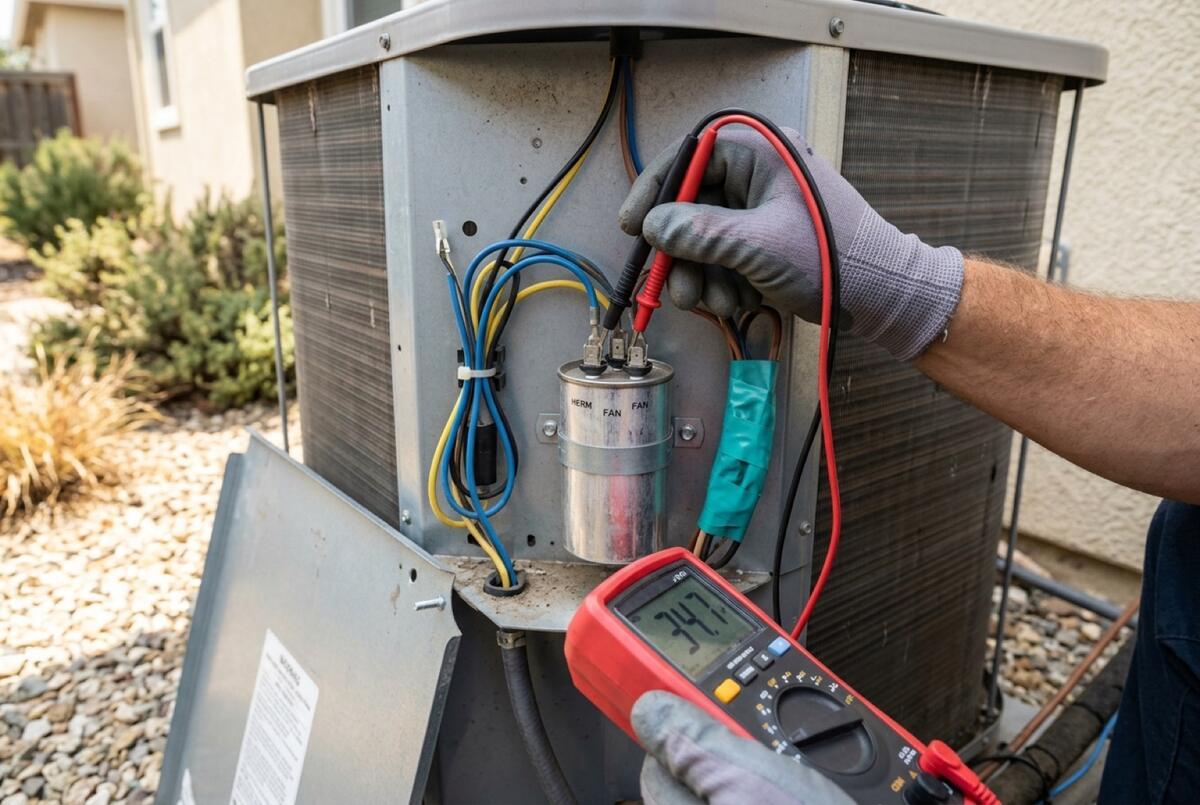
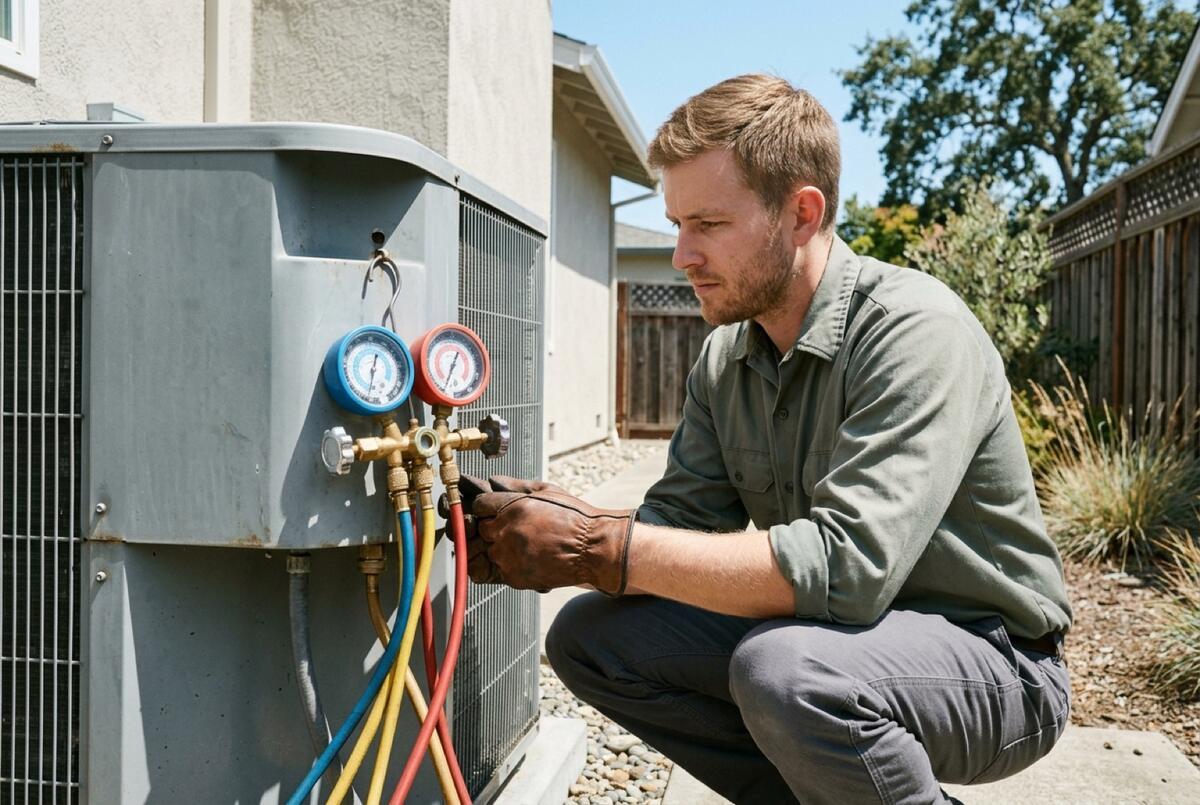
A diagnostic-first visit starts by measuring, not guessing. The technician checks the capacitor and contactor, reads refrigerant pressures against the system's target charge, inspects the coil and filter for airflow restriction, tests the blower and airflow, and verifies the thermostat and control signals. The goal is to separate a quick, worthwhile repair from a symptom of a larger system problem. If the real issue turns out to be delivery-side — leaky ducts or starved returns — the fix belongs in ductwork and airflow correction, not another pound of refrigerant.
Written options
Example- 1.Repair the failed partA scary symptom is sometimes a small part.
- 2.Repair plus a related weaknessThe failure, plus the weak spot found on the same visit.
- 3.ReplaceWhen age, repair cost, refrigerant, and comfort math support it.
AC Repair by city
Each city page is written for that city's permits, electric utility, and housing stock — not a swapped city name.
- AC Repair in SacramentoSMUD electric / PG&E gas
- AC Repair in Elk GroveSMUD electric / PG&E gas
- AC Repair in RosevilleRoseville Electric Utility electric / PG&E gas
- AC Repair in FolsomSMUD electric / PG&E gas
- AC Repair in Rancho CordovaSMUD electric / PG&E gas
- AC Repair in Citrus HeightsSMUD electric / PG&E gas
- AC Repair in CarmichaelSMUD electric / PG&E gas
- AC Repair in Fair OaksSMUD electric / PG&E gas
- AC Repair in West SacramentoPG&E electric / PG&E gas
- AC Repair in DavisValley Clean Energy (generation) + PG&E (delivery) electric / PG&E gas
Common signs and when to call
- The system runs but blows warm or room-temperature air
- The outdoor unit hums but the fan doesn't spin (often a failed capacitor)
- Weak airflow from the vents even with the blower running
- Ice on the refrigerant lines or indoor coil
- Short-cycling — turning on and off every few minutes
- A breaker that trips whenever the AC starts
- Warm air upstairs while downstairs cools (an airflow or duct problem, not always the AC)
- Water pooling around the indoor unit or a ceiling stain below the attic air handler
The failures that come up most in Sacramento
Capacitors are the number-one no-cool call. This small cylinder gives the compressor and fan motor the jolt they need to start; heat degrades it, and once it weakens the outdoor unit hums but won't spin. Testing it takes a meter and a minute. Contactors — the relay that switches high voltage to the outdoor unit — pit and burn over time, so the unit either won't energize or won't shut off. Low refrigerant is never 'just low'; R-410A doesn't get used up, so a low charge means a leak that has to be found and fixed, not topped off. Frozen coils show up as ice on the lines and usually trace back to restricted airflow (dirty filter, dirty coil, weak blower) or low charge — running the system iced-over can slug liquid refrigerant back to the compressor and turn a cheap fix into an expensive one.
| Failure | What you notice | What it usually means |
|---|---|---|
| Capacitor | Outdoor unit hums but the fan will not spin | Heat-weakened start part; a meter test takes a minute |
| Contactor | Outdoor unit will not energize, or will not shut off | Pitted or burned relay switching high voltage |
| Low refrigerant | Weak cooling or ice on the lines | A leak to find and fix; R-410A is not used up, so a top-off is not a repair |
| Frozen coil | Ice on the lines or indoor coil | Restricted airflow (filter, coil, blower) or low charge; running it iced can damage the compressor |
| Compressor or evaporator coil | No cooling with power present, or a coil leak | Costly repair; on an older or R-22 system, price a replacement too |
Compressor, coil, and the calls that aren't worth chasing
The compressor is the heart and the most expensive single part; when it fails on an older system the repair often costs more than the unit is worth, especially on anything still running R-22 (see the R-410A refrigerant transition for why old refrigerant makes those repairs a dead end). A leaking evaporator coil is similar math — the part is costly, the labor is significant, and on an aging system it's usually a signal to price a replacement instead. A failed blower motor or a stuck TXV (metering device) falls in between: repairable, but worth weighing against the system's age. This is exactly the call the repair-vs-replace calculator is built to help you frame before a technician ever quotes it.
Sacramento heat exposes weak systems
A system that limps through mild weather often fails once the house is heat-soaked for days. Long valley heat waves push weak capacitors, dirty coils, low charge, and undersized returns past their limit. Attic duct temperatures climb well above the outdoor reading, so a marginal airflow problem becomes an obvious comfort problem in July. That's why a hot upstairs is frequently an airflow or duct issue rather than a broken AC. When the whole house simply can't keep up during a heat wave, our guide to why an AC struggles in Sacramento heat walks through the difference between a broken system and one that's just outmatched.
What you get from 916air
Every AC repair visit ends with:
- A plain explanation of what failed and why
- Repair options in writing, with the tradeoffs spelled out
- An honest read on whether repair or replacement is the smarter money
- No pressure toward a new system when a repair makes sense
Written options
Example- 1.Repair the failed partA scary symptom is sometimes a small part.
- 2.Repair plus a related weaknessThe failure, plus the weak spot found on the same visit.
- 3.ReplaceWhen age, repair cost, refrigerant, and comfort math support it.
How it works
- 1
Diagnose
Measure the electrical, refrigerant, and airflow side of the system to isolate the real failure.
- 2
Explain
Walk you through what failed, in plain language, with the cause — not just the symptom.
- 3
Options in writing
Give you the repair options and cost in writing, including whether replacement is worth comparing.
- 4
Fix and verify
Complete the repair and confirm the system holds its target performance before leaving.
What affects the cost
- The specific part that failed (a capacitor is minor; a compressor or coil is major)
- Whether the refrigerant is R-22 (no longer produced) or R-410A
- How much refrigerant a recharge requires, and whether there's a leak to fix first
- Access to the equipment and the age/condition of the surrounding system
- Whether the repair is a standalone fix or a band-aid on a system near end of life
- Whether diagnosis turns up a delivery-side problem (ducts, returns) that needs its own correction
See planning ranges in the AC Replacement Cost in Sacramento: Planning Ranges.
Planning tools
HVAC replacement cost calculator
Planning ranges for AC, furnace, heat pump, and mini-split replacement.
AC repair vs replace calculator
Weigh age, repair cost, refrigerant, and comfort to see which way the math leans.
Related services
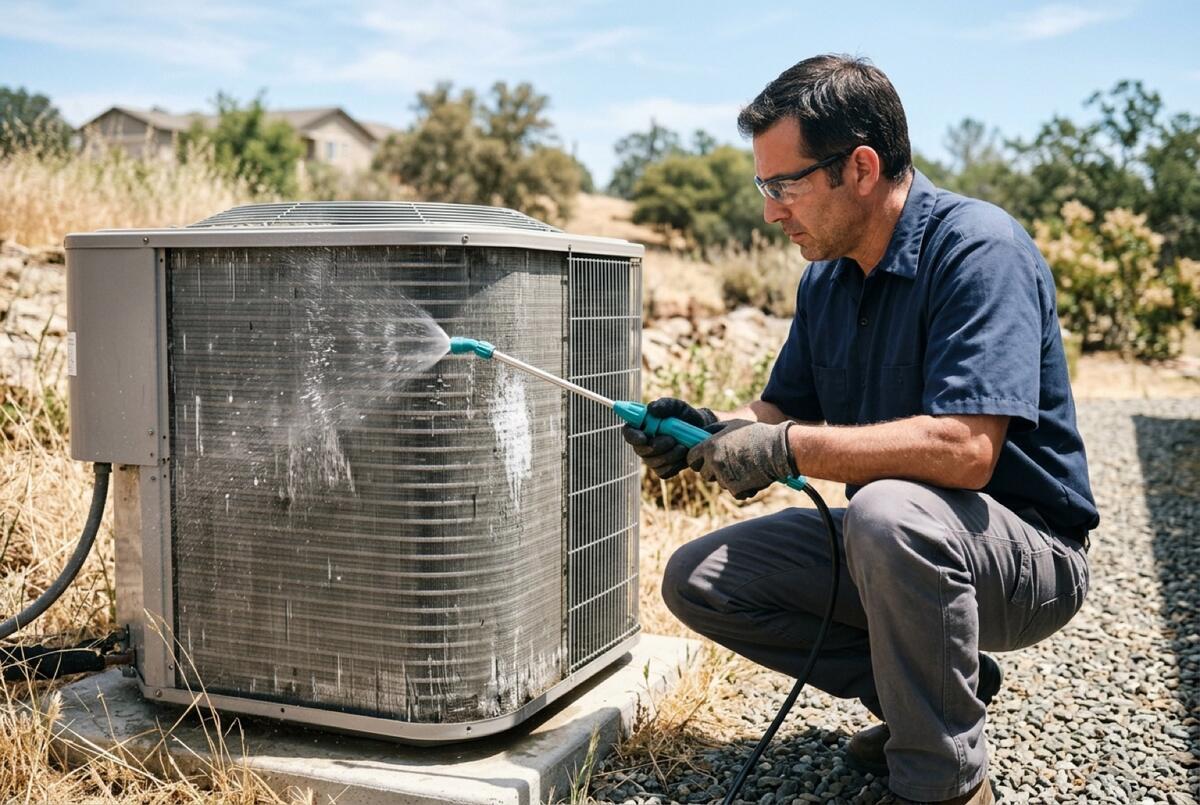
AC Maintenance
Ready before the first heat wave.
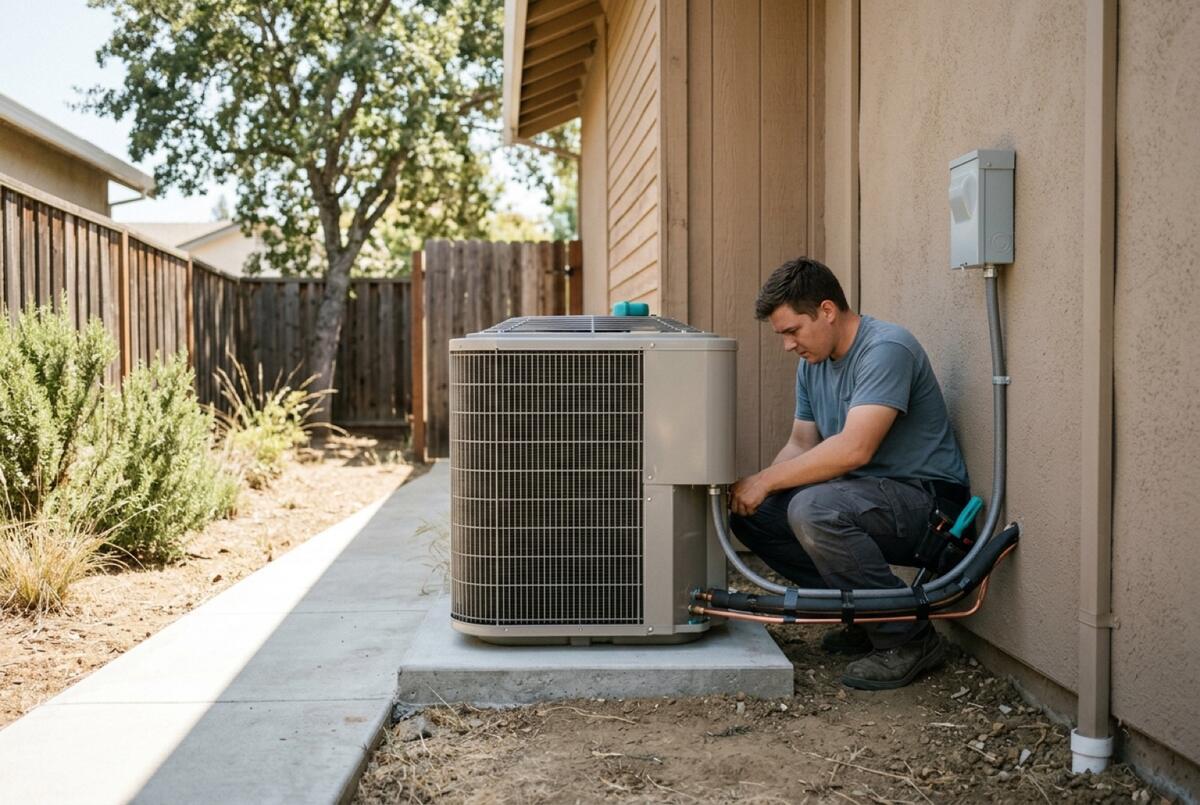
AC Installation
Right-sized replacement with a written scope.
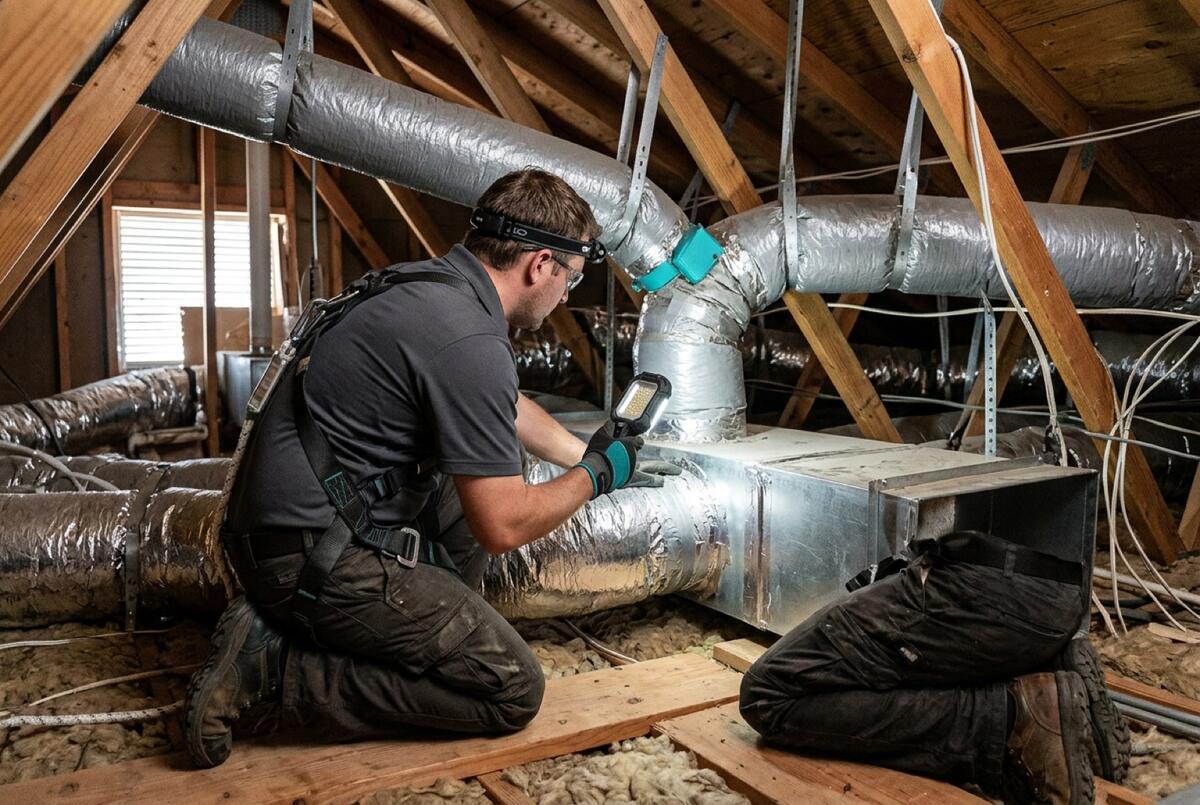
Ductwork & Airflow
Fix the delivery, not just the equipment.
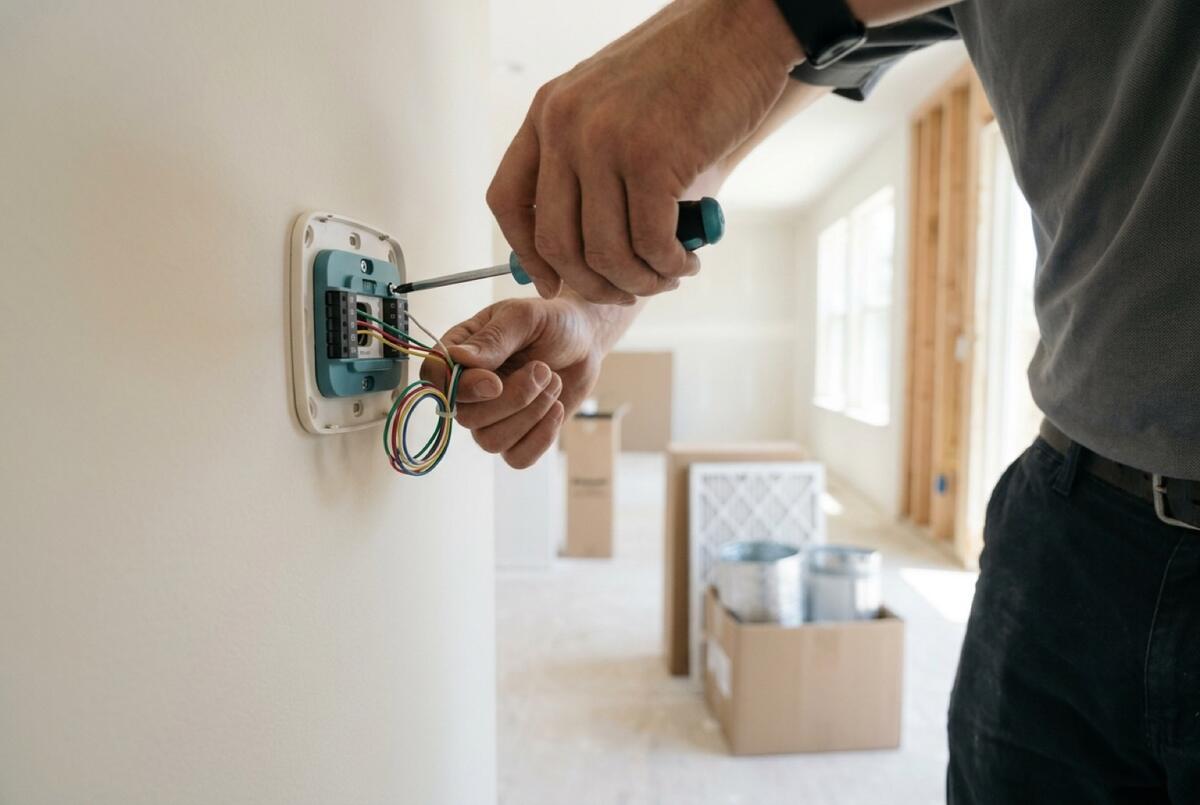
Thermostats
Controls that do what you tell them.
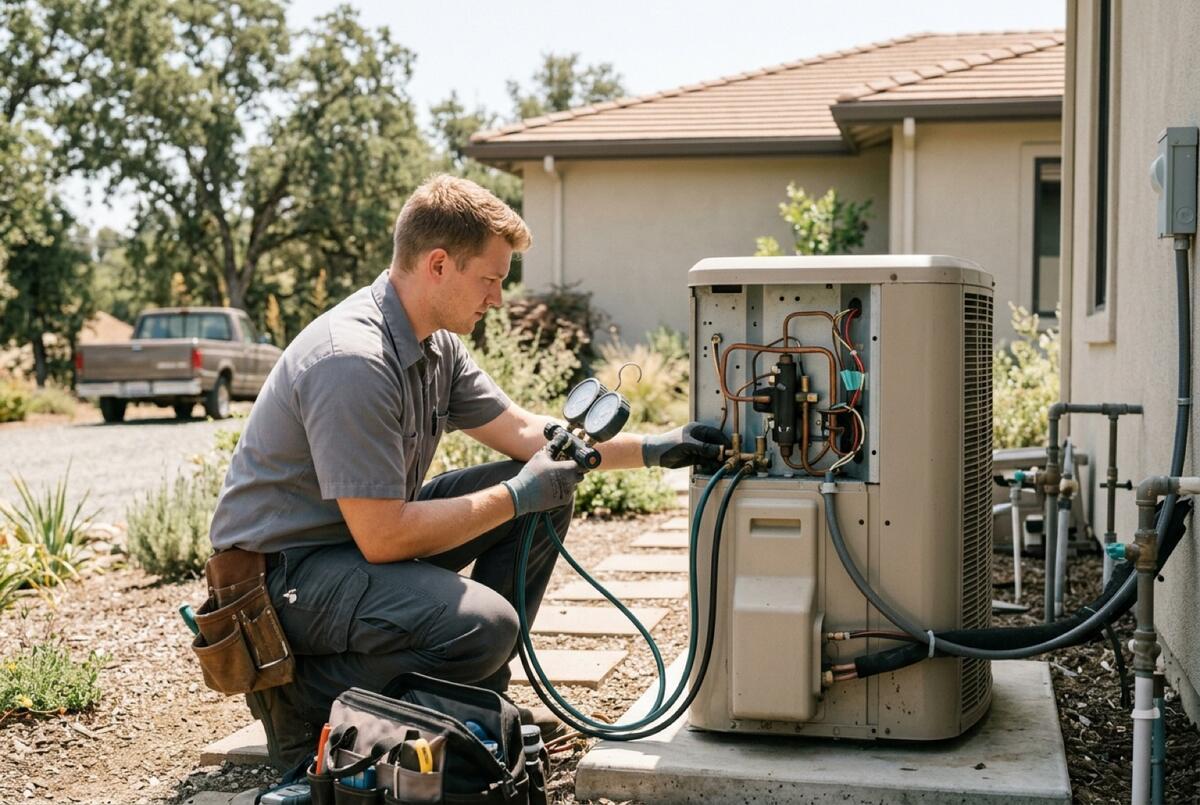
Heat Pump Repair
Repairs that respect the system's math.
Related guides
AC Not Cooling During a Sacramento Heat Wave? Start Here
AC running but not cooling during a Sacramento heat wave? Check the thermostat, filter, breaker, outdoor unit, and coil first — and know when it's time to call.
Guide · ReviewedRepair or Replace Your HVAC System? A Sacramento Decision Guide
Deciding whether to repair or replace your AC or furnace? Weigh age, repair cost, refrigerant, efficiency, and comfort, plus the $5,000 test.
Guide · ReviewedThe R-410A Refrigerant Transition: What It Means for Your AC
New AC systems use lower-GWP refrigerant, existing R-410A systems can still be serviced, and older R-410A stock can still be installed. What that means for you.
Guide · ReviewedAC Coil Freezing Up? Why It Ices Over and What to Do
Ice on your AC lines or indoor coil? Why it freezes in summer, how to thaw it safely, the causes you can check, and when a frozen AC needs a technician.
Guide · ReviewedAC Leaking Water Inside? Causes, Risks and What to Do
Water around the indoor unit or a stain under an attic air handler? Turn the AC off, then check the condensate drain, float switch and pan. Here's when to call.
Guide · Reviewed
Frequently asked questions
How fast can you come out for a no-cooling call?
Urgent no-cooling calls are prioritized in our scheduling, especially during heat waves. Share your address and the symptoms through the request form and we'll get back to you with timing.
Do I need a repair or a full replacement?
It depends on the system's age, the repair cost, the refrigerant type, and how the rest of the system is holding up. We diagnose first and give you the honest math — a scary symptom is sometimes a $300 part, and sometimes it's a sign the system has reached the end. Our repair-vs-replace calculator can give you a starting read.
My AC is old and uses R-22. Is it worth repairing?
R-22 refrigerant is no longer produced, so any repair that involves recharging an R-22 system tends to be expensive dead-end money. Small non-refrigerant repairs can still make sense, but if the fix involves the refrigerant circuit, replacement usually pencils out better. We'll lay out both paths.
Why is only my upstairs hot?
That's usually an airflow or duct problem rather than a broken AC — attic duct runs leak into extreme summer heat, and returns are often undersized. We test airflow as part of the diagnostic so we fix the real cause instead of just adding refrigerant, and correcting it falls under ductwork and airflow work rather than a refrigerant recharge.
My outdoor unit hums but the fan won't spin. What is that?
That's the classic signature of a failed run capacitor — the motor is getting power but has no starting torque. It's one of the most common and least expensive AC repairs, and it's testable in minutes with a meter. Don't keep switching the system on and off while it's in that state; a compressor trying to start against a dead capacitor can overheat and cause a much bigger failure.
There's ice on my AC lines. Should I keep running it?
No — shut it off and switch the fan to 'on' to let the coil thaw. Ice almost always means restricted airflow (a clogged filter, a dirty coil, or a weak blower) or a low refrigerant charge. Running a frozen system can send liquid refrigerant back to the compressor and destroy it, turning a minor airflow fix into a compressor replacement. Once it's thawed we can read the pressures and airflow to find the actual cause.
Get an AC repair estimate for your Sacramento home
916air serves the greater Sacramento region. Send the details and we'll come back with a written, site-specific scope.