AC Frozen? Why the Coil Ices Up and What to Do Next
Ice on your AC lines or indoor coil? Why it freezes in summer, how to thaw it safely, the causes you can check, and when a frozen AC needs a technician.
Last reviewed:
What should you do when your AC is frozen?
Stop cooling, let it thaw completely, and fix the airflow before you run it again. Running a frozen system makes the ice thicker, and it can send liquid refrigerant back toward the compressor, which is how a filter problem turns into a major repair.
Do this, in order:
- 1. Turn cooling off. Set the thermostat to Off, or raise the cooling setpoint well above room temperature so the compressor stops.
- 2. Set the fan to On. The blower pulls room air across the coil and thaws it much faster than sitting idle.
- 3. Plan for the meltwater. A thawing coil releases a lot of water at once, and the drain pan can overflow. Put towels around the indoor unit. If the air handler is in the attic, watch the ceiling below it. Our guide to an AC leaking water covers what to do if it does.
- 4. Check the filter. If it's gray and matted, replace it now. A clogged filter is the most common cause of a frozen coil.
- 5. Open the airflow path. Open supply registers and clear anything blocking the return grilles.
- 6. Leave the ice alone. Don't chip it, scrape it, or aim a heat gun at it. The coil fins and copper tubing damage easily.
- 7. Restart only after a full thaw. Once the lines and coil are clear and dry, turn cooling back on and check the lines again over the next few hours. If ice returns, stop and call.
Why does an AC coil freeze in the middle of summer?
Because the indoor coil gets colder than it's designed to. The evaporator coil runs cold enough to pull heat and moisture out of the air blowing across it, which is why it drips water into a drain pan in normal operation (Natural Resources Canada (opens in new tab) describes the same cooling cycle for heat pumps). It's meant to stay just above freezing.
Two things push it below 32°F. The first is too little air. The warm air crossing the coil is what keeps it from getting too cold, so a dirty filter, blocked returns or a weak blower lets the coil temperature fall. The second is a low refrigerant charge, which drops the pressure, and with it the temperature, inside the coil.
Once frost starts, it feeds itself. Ice insulates the coil and blocks more airflow, so the coil gets colder and the ice gets thicker until it reaches the copper line running to the outdoor unit. That's often the first place homeowners see it.
What causes the ice, and what can you check yourself?
Most frozen coils trace back to airflow or refrigerant. The table separates the causes you can check from the ones that need instruments.
| Cause | How to tell | Safe check | Call when |
|---|---|---|---|
| Dirty filter | Gray, matted filter; weak air at the vents | Replace it | Ice returns with a clean filter |
| Blocked returns or closed vents | Furniture over a return grille; many registers shut | Clear the returns and open the registers | Airflow is still weak |
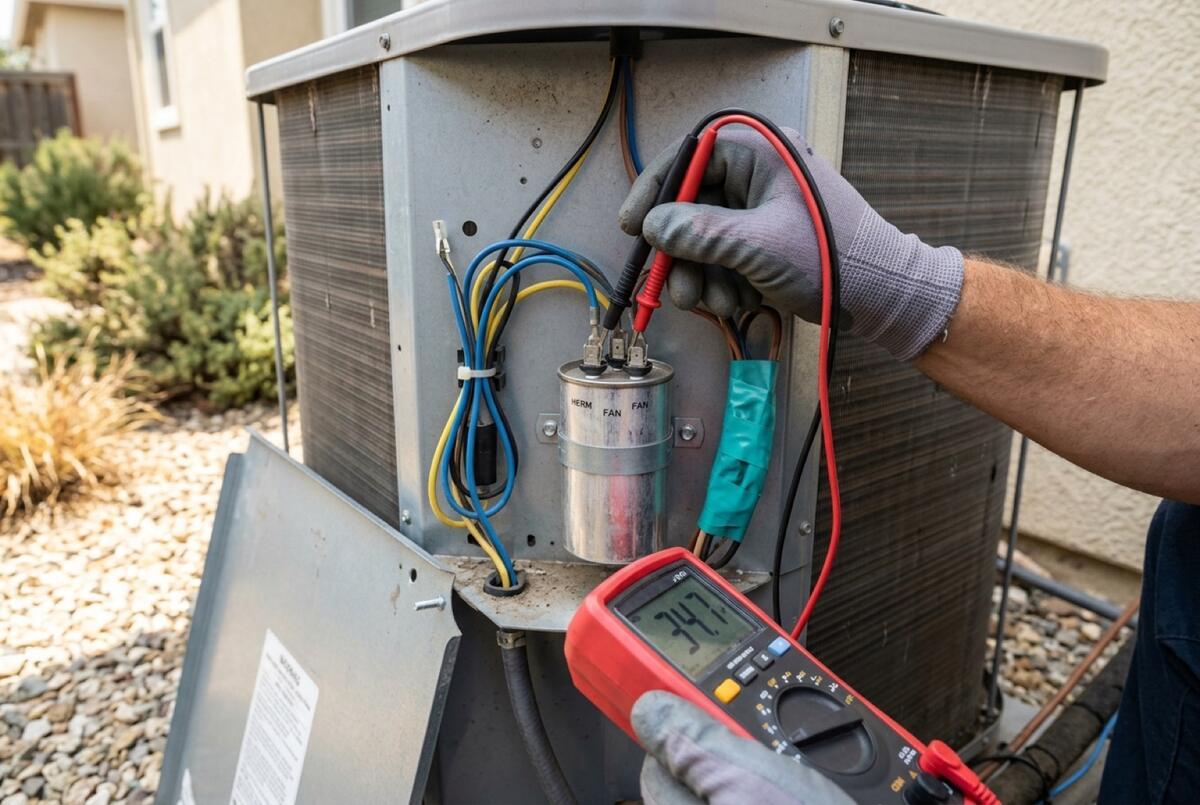
| Weak or failing blower | Low airflow from every vent; blower hums or sounds slow | Confirm the fan setting and filter | Always. Motor and capacitor work is technician-only. |
| Dirty indoor coil | Ice even with a clean filter, often on a system that went years between filter changes | None. The coil is sealed inside the cabinet. | Coil cleaning needs a technician |
| Low refrigerant from a leak | Ice on the outdoor copper line; cooling that faded over weeks; a hiss or bubbling sound | None | Every time. It needs a leak search and repair. |
| Collapsed or disconnected return duct | Weak airflow, new rattles, or dusty rooms | Look at visible ducts only | You suspect a duct problem |
| Running the AC on a cool night | Ice after a mild night with cooling still on | Turn cooling off when it's cool outside | It also freezes in normal summer weather |
Why do Sacramento heat waves make freezing more likely?
Because the system never gets a break. During a long valley heat wave, an AC may run almost nonstop for days. In milder weather, the compressor cycles off and any light frost on the coil melts. In a heat wave there's no off-cycle, so a small airflow problem has time to build into a block of ice.
Filters load up faster then too. Dust, cottonwood and wildfire smoke all end up in the filter, and a filter that was fine in May can choke airflow by late July. ENERGY STAR (opens in new tab) recommends checking filters once a month, and notes that airflow problems can cut a system's efficiency by up to 15 percent.
A frozen coil also looks like a failed AC: warm air, a running fan, no cooling. If you're not sure ice is the problem, start with our AC-not-cooling checklist, which covers the broader set of causes.
Can you just add refrigerant to fix a frozen AC?
No. Refrigerant circulates in a sealed loop and isn't used up, so a low charge means a leak. Adding refrigerant without finding the leak gets the system cooling for a while, and then it freezes again as the charge leaks back out.
Refrigerant work is also regulated. EPA's Section 608 program (opens in new tab) prohibits venting refrigerants, including HFCs like R-410A, during service, and it's work for a certified technician. On an older system, the leak repair can be big enough to raise the repair-or-replace question, especially with the R-410A refrigerant transition changing what new equipment uses.
When should you call for a frozen AC?
Call when the ice comes back after a full thaw with a clean filter and open vents, or right away if you see any of the signs below. An AC repair diagnostic measures airflow, static pressure and the refrigerant charge, so the fix matches the cause. For City of Sacramento homes, see AC repair in Sacramento.
Stop and call when:
- Ice returns within a day of a full thaw and a new filter
- There's ice or frost on the copper line at the outdoor unit
- You hear hissing or bubbling from the lines or coil
- The blower is weak, noisy, or not running
- Meltwater is overflowing the drain pan or reaching a ceiling
- A breaker trips when the system starts
How do you keep the coil from freezing again?
Keep air moving and catch the slow problems early. Check the filter monthly and change it when it's dirty, more often in smoke season. Keep return grilles clear and most registers open, even in rooms you don't use. Turn cooling off on cool nights instead of letting it run.
A spring AC tune-up checks the refrigerant charge, the blower and the coil before the first heat wave. If the airflow numbers are low even with clean equipment, the ducts are the next suspect. ENERGY STAR (opens in new tab) estimates typical duct systems lose 20 to 30 percent of their air to leaks and poor connections, and a ductwork and airflow check finds where.
Sources
- ENERGY STAR: HVAC maintenance checklist (airflow, refrigerant level, filters) (opens in new tab)
- ENERGY STAR: Duct sealing (opens in new tab)
- U.S. EPA: Section 608 stationary refrigeration and air conditioning (opens in new tab)
- Natural Resources Canada: Heating and cooling with a heat pump (cooling cycle and condensate) (opens in new tab)
Related services
AC Repair
Find the real failure. Fix what's actually broken.
AC Maintenance & Tune-Ups
Ready before the first heat wave.
Ductwork & Airflow
Fix the delivery, not just the equipment.
Related guides
AC Not Cooling During a Sacramento Heat Wave? Start Here
AC running but not cooling during a Sacramento heat wave? Check the thermostat, filter, breaker, outdoor unit, and coil first — and know when it's time to call.
Troubleshooting · ReviewedAC Leaking Water Inside? Causes, Risks and What to Do
Water around the indoor unit or a stain under an attic air handler? Turn the AC off, then check the condensate drain, float switch and pan. Here's when to call.
Troubleshooting · ReviewedRepair or Replace Your HVAC System? A Sacramento Decision Guide
Deciding whether to repair or replace your AC or furnace? Weigh age, repair cost, refrigerant, efficiency, and comfort, plus the $5,000 test.
Cost and decisions · Reviewed
Frequently asked questions
How long does it take a frozen AC coil to thaw?
Usually a few hours with cooling off and the fan on, and longer if the ice is thick or has reached the outdoor line. Let it thaw completely before restarting, including the copper lines. Restarting with ice still on the coil refreezes it quickly. Keep towels around the indoor unit, because the meltwater can overflow the drain pan.
Can I run the fan while the AC is frozen?
Yes. With cooling turned off, setting the fan to On is the fastest safe way to thaw the coil, because it moves room-temperature air across the ice. Just make sure the compressor is off: the thermostat should be set to Off for cooling, or the setpoint raised well above room temperature. Then let the fan run until the ice is gone.
Will a frozen AC damage the compressor?
It can if you keep running it. A frozen coil can't boil off all the refrigerant passing through it, so liquid refrigerant can travel back toward the compressor, which is built to pump vapor. Repeated freezing also strains the system and hides a leak or airflow problem. Turning cooling off as soon as you see ice is the best protection.
Why is there ice on the copper line at my outdoor unit?
The larger, insulated copper line carries cold refrigerant from the indoor coil back to the outdoor unit. Frost or ice on it in summer usually means the indoor coil is already frozen, and the ice has spread along the line. Low refrigerant and restricted airflow are the common causes. Turn cooling off, thaw it, and call if it returns.
Can a dirty filter really freeze an AC?
Yes, and it's the most common cause. A clogged filter cuts the warm air flowing across the indoor coil, so the coil gets colder until moisture on it freezes. ENERGY STAR recommends checking filters monthly. If the ice doesn't come back after a full thaw and a new filter, the filter was probably the whole problem.
Talk to someone who explains first
916air diagnoses the real problem and puts your options in writing. Send your details to get started.