AC Not Cooling in the Sacramento Heat: What to Check Before You Call
AC running but not cooling during a Sacramento heat wave? Check the thermostat, filter, breaker, outdoor unit, and coil first — and know when it's time to call.
Last reviewed:
First, the safe checks you can do yourself
Work through these in order before you assume the worst. Most no-cool calls during a heat wave trace back to one of these, and several are things you can fix in a few minutes without any tools. The goal is to rule out the simple causes so that if you do call, you already know it's a real equipment failure and not a blown filter.
Start at the top and work down:
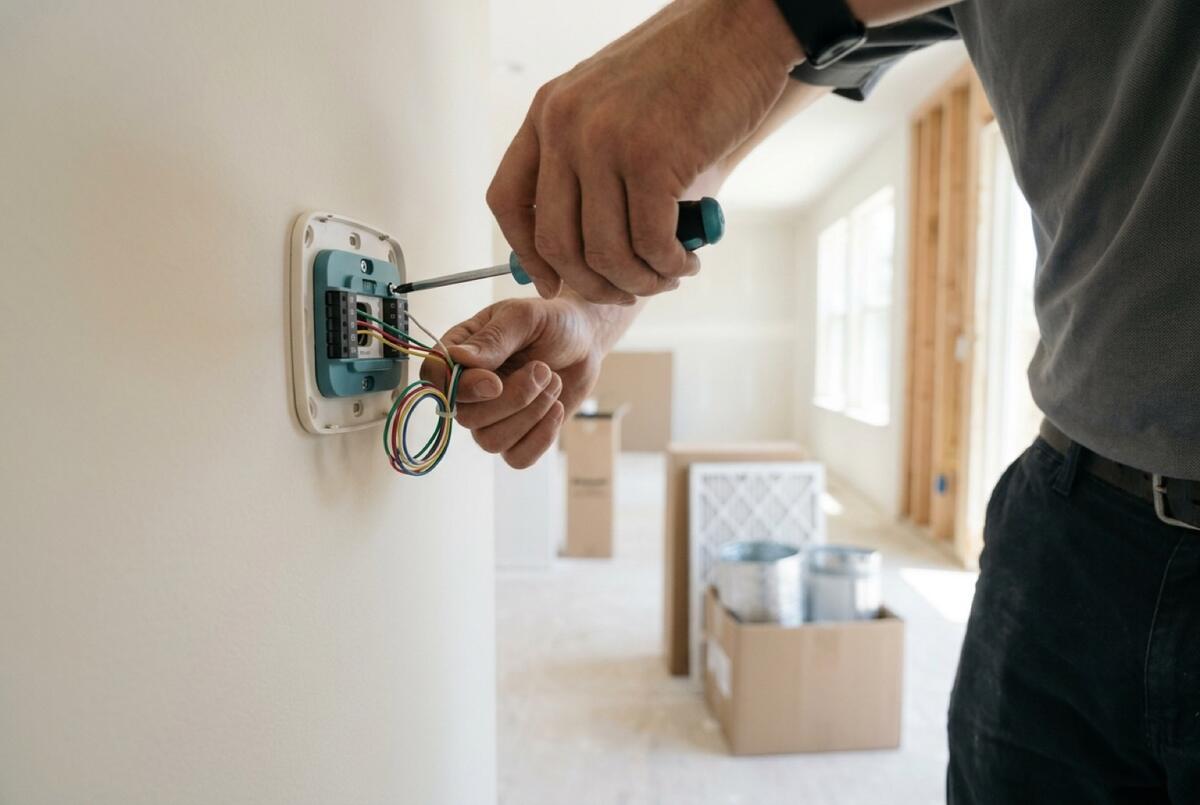
- Thermostat — set it to Cool (not Auto-heat or Fan-only) and drop the target several degrees below the current room temperature. A blank or frozen screen is often just dead batteries; replace them before assuming the AC failed. If the thermostat is set to "On" rather than "Auto" for the fan, the blower runs constantly and pushes room-temperature air between cooling cycles, which reads as "not cooling" even when the system is fine.
- Air filter — a clogged filter chokes airflow and is one of the most common no-cool causes, especially in smoke and dust season. ENERGY STAR recommends checking the filter monthly and changing it at least every three months; during wildfire smoke it loads up much faster. If it's gray and matted, replace it and give the system 15 to 30 minutes to recover before judging whether it's working.
- Breaker — check the electrical panel for a tripped AC breaker and reset it once, fully off then on. If it trips again immediately, stop and call; a repeatedly tripping breaker is an electrical fault, not a reset problem, and forcing it can damage the compressor.
- Condensate float switch — many Sacramento systems have a safety switch on the drain pan that shuts the AC off when the condensate line clogs, which is common in summer. If the indoor unit has power but won't start cooling, a full drain pan or a tripped float switch is a frequent, overlooked cause. A visibly overflowing pan is the tell.
- Outdoor unit — make sure the condenser outside is actually running. Clear leaves, cottonwood fluff, and grass clippings from the coil fins, and confirm nothing within a couple of feet is blocking airflow. A condenser smothered in cottonwood during a June-to-July valley heat wave can't reject heat, and the system slowly loses its ability to cool.
- Frozen coil — look for ice on the copper refrigerant lines or the indoor coil. If you see ice, turn the system off at the thermostat, switch the fan to "On" to help it thaw, and wait; running a frozen system makes it worse and can send liquid refrigerant back to the compressor.
- Vents and returns — confirm supply vents are open and return grilles aren't blocked by furniture, rugs, or boxes, which starves the system for the air it needs to move heat out of the house.
Written options
Example- 1.Repair the failed partA scary symptom is sometimes a small part.
- 2.Repair plus a related weaknessThe failure, plus the weak spot found on the same visit.
- 3.ReplaceWhen age, repair cost, refrigerant, and comfort math support it.
How central AC actually cools — so the symptoms make sense
Understanding the basic loop makes every symptom easier to read. Your AC doesn't "make cold"; it moves heat. The indoor evaporator coil absorbs heat from the air your blower pushes across it, the refrigerant carries that heat outside, and the outdoor condenser coil and fan dump it into the outside air. Three things have to work together for that to happen: airflow (a clean filter, an open return, a healthy blower), a correct refrigerant charge in a sealed loop, and the electrical parts that start the compressor and fans. When cooling fails, it's almost always one of those three legs — and the pattern of symptoms tells you which one. That's also why "just add refrigerant" is rarely the real fix: a properly charged, sealed system doesn't consume refrigerant, so a low charge means a leak, not normal use.
What the symptoms usually point to
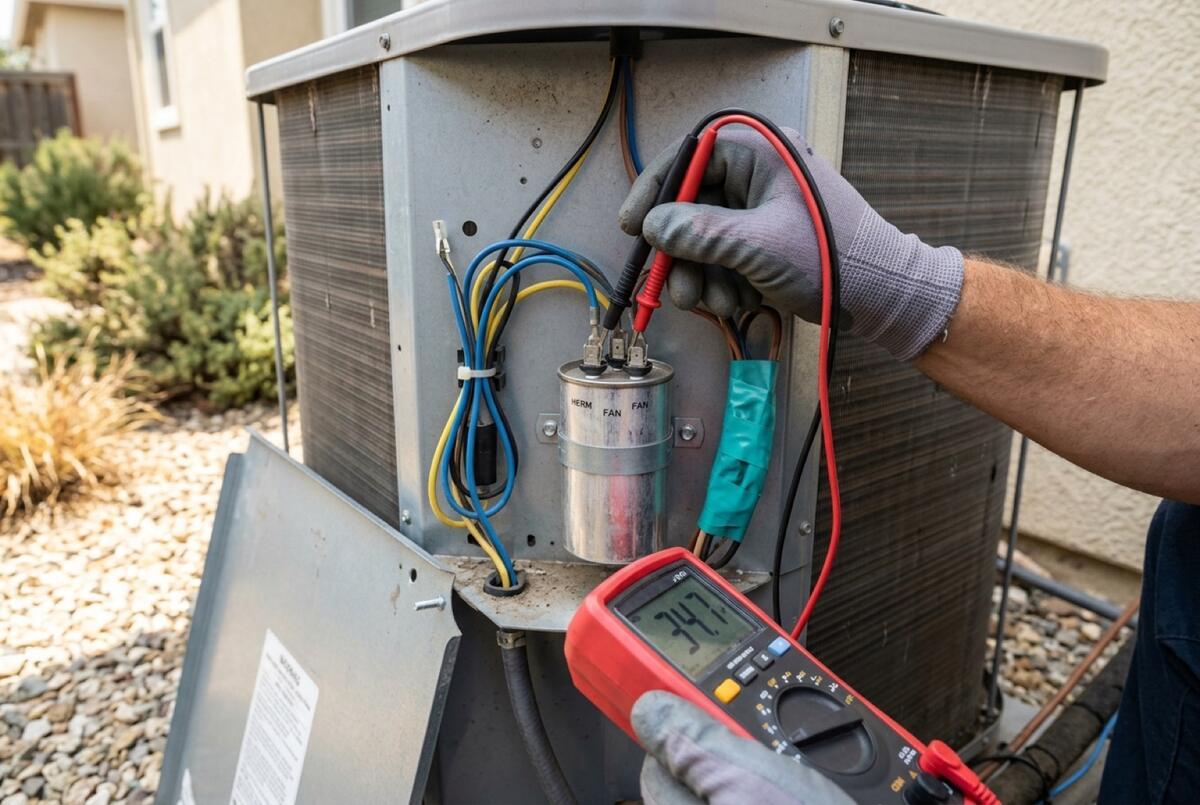
The pattern narrows it down fast. Warm air from every vent with the outdoor unit humming but its fan not spinning often points to a failed capacitor — the part that gives the motor its starting jolt, and the single most common AC failure in valley heat. Weak but cool air points toward airflow: a dirty filter, a blocked return, a failing blower, or a duct problem. Ice on the lines usually means restricted airflow or a low refrigerant charge from a leak. Warm air with the outdoor fan spinning normally can be a compressor or contactor issue. Short-cycling — turning on and off every few minutes — can be a control, sizing, refrigerant, or airflow problem. And a breaker that trips on startup is an electrical fault that needs a technician, not another reset. None of these need a guess: a proper AC repair diagnostic measures the electrical, refrigerant, and airflow side to isolate which leg actually failed.
| Symptom | Likely cause | Safe homeowner check | Call when |
|---|---|---|---|
| Warm air from every vent; outdoor unit hums but its fan won't spin | Failed capacitor | Confirm the thermostat is on Cool and the breaker hasn't tripped | Right away: a fan that won't spin is a technician job |
| Weak but cool air | Airflow: dirty filter, blocked return, failing blower, or ducts | Replace a clogged filter and clear the return grilles | Airflow is still weak with a clean filter and open returns |
| Ice on the lines or coil | Restricted airflow or low charge from a leak | Turn cooling off, set the fan to On to thaw, change the filter | Ice comes back after thawing and a filter change |
| Warm air with the outdoor fan spinning | Dirty condenser coil, contactor, compressor, or a leak | With power off, rinse the outdoor coil from the outside in | It still blows warm once the coil is clear |
| Short-cycling every few minutes | Controls, sizing, refrigerant, or airflow | Check the thermostat setting and the filter | It won't hold temperature during a heat wave |
| Breaker trips on startup | Electrical fault | Reset once, fully off then on | It trips again: stop resetting and call |
Why a Sacramento heat wave makes a marginal system finally fail
A system that coasts through mild spring weather often gives up once the house is heat-soaked for several days in a row. Long valley heat waves push weak capacitors, dirty coils, low refrigerant charge, and undersized returns past their limit all at once — the equipment has no slack left. Every AC is sized to hold a target temperature difference below the outdoor reading, not to conjure any temperature you want; during a multi-day 105°F stretch, a system that's even slightly compromised simply can't keep up, and the delta breeze that normally cools the evening can't rescue it. Attic duct temperatures climb far above the outdoor reading, so a small airflow restriction that was invisible in May becomes an obvious comfort problem in July. That's also why a hot upstairs with a cool downstairs is frequently an airflow or duct problem rather than a broken AC — the equipment works, but the delivery can't keep up. It's also why routine AC maintenance before summer catches the weak capacitor or dirty coil before the heat wave does.
The overheating condenser: a specifically Sacramento failure
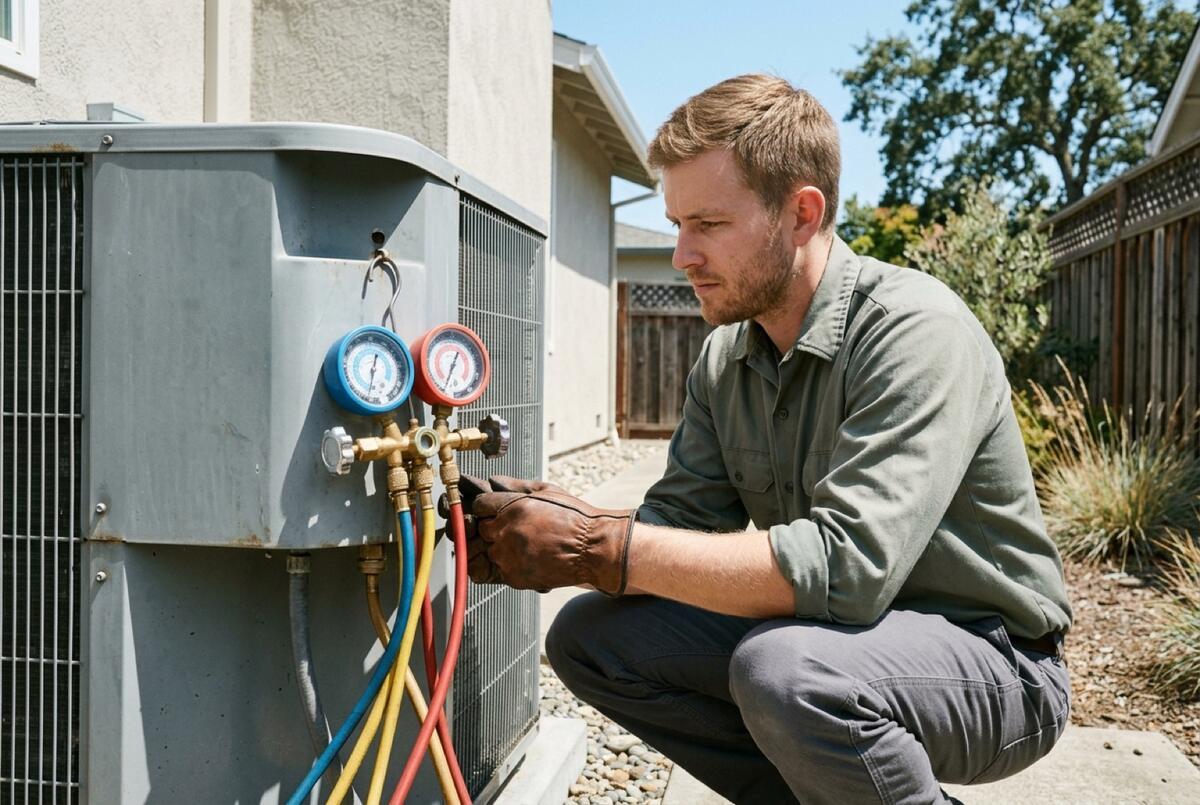
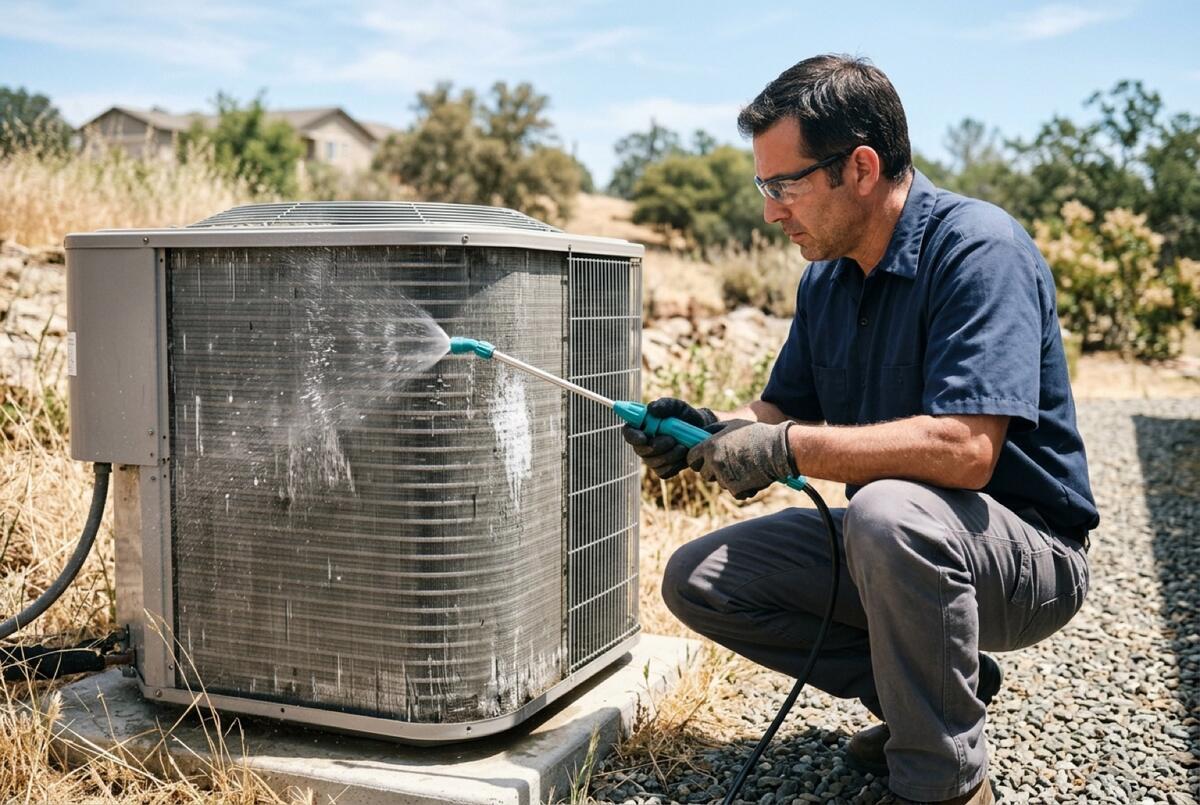
During back-to-back triple-digit days, the outdoor unit works hardest exactly when it has the least margin. Two things quietly sabotage it. First, coil fouling: cottonwood, dust, and grass clippings mat into the condenser fins and act like a blanket, so the unit can't reject heat and head pressures climb. Second, radiant heat load on a west- or south-facing equipment pad with no shade, where the air entering the coil is already superheated. A condenser that cooled fine in June can lose capacity in a July heat wave for no reason other than accumulated debris. Gently rinsing the outdoor coil from the outside in with a garden hose (power off first) is homeowner-safe and sometimes restores lost capacity — but if the fins are bent or the unit still runs hot after cleaning, that's a diagnostic, not a DIY fix.
When to stop and call for a diagnostic
Some symptoms mean you've reached the edge of safe DIY and continuing to troubleshoot risks turning a small repair into a large one. Running a system that's iced up or tripping breakers is how a cheap fix becomes a compressor replacement.
Call instead of continuing to troubleshoot when:
- The outdoor fan won't spin, or the unit hums without starting — a classic failed-capacitor signature.
- You see ice on the coil or refrigerant lines that returns after thawing and a filter change.
- A breaker trips again right after you reset it.
- Air still isn't cold after a clean filter, a thermostat check, and a clear outdoor coil.
- The system short-cycles or won't hold the set temperature during a heat wave.
- You smell something electrical or burning, or hear grinding or loud buzzing from either unit.
- There's water pooling around the indoor unit or a ceiling stain below an attic air handler.
What to have ready before you call
A little prep makes the visit faster and the diagnosis sharper. Note what you've already checked and what changed — did it stop cooling gradually over the heat wave, or quit all at once? Is the outdoor fan spinning? Is there ice, water, or an unusual sound? Knowing the system's approximate age helps too, because on an older system a big repair opens the repair-or-replace conversation, and if the unit still runs on R-22 that changes the math entirely (see the R-410A refrigerant transition guide). Urgent no-cooling calls are prioritized in scheduling, especially during heat waves; sharing your address and what you've already tried through the request form gives the visit a head start on the diagnosis.
Related services
AC Repair
Find the real failure. Fix what's actually broken.
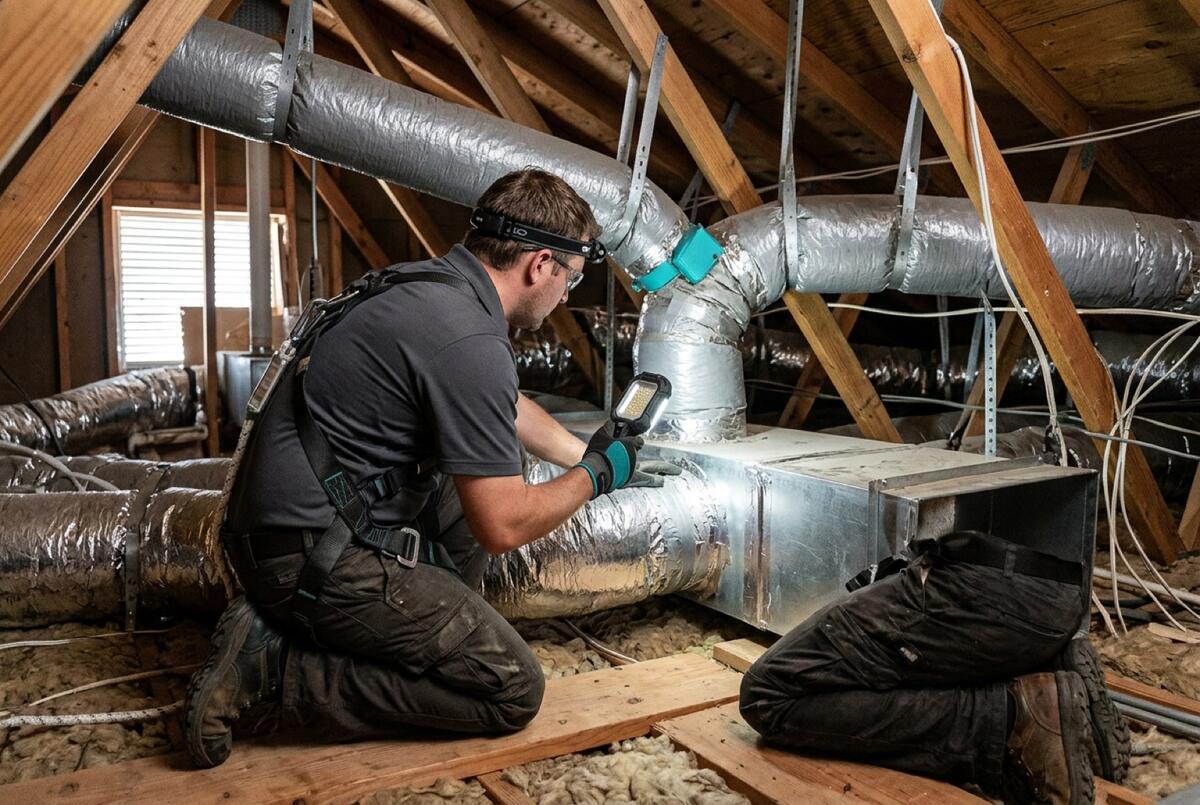
Ductwork & Airflow
Fix the delivery, not just the equipment.
AC Maintenance & Tune-Ups
Ready before the first heat wave.
Thermostat Repair & Installation
Controls that do what you tell them.
Related guides
Repair or Replace Your HVAC System? A Sacramento Decision Guide
Deciding whether to repair or replace your AC or furnace? Weigh age, repair cost, refrigerant, efficiency, and comfort, plus the $5,000 test.
Cost and decisions · ReviewedThe R-410A Refrigerant Transition: What It Means for Your AC
New AC systems use lower-GWP refrigerant, existing R-410A systems can still be serviced, and older R-410A stock can still be installed. What that means for you.
Cost and decisions · ReviewedAC Coil Freezing Up? Why It Ices Over and What to Do
Ice on your AC lines or indoor coil? Why it freezes in summer, how to thaw it safely, the causes you can check, and when a frozen AC needs a technician.
Troubleshooting · ReviewedAC Leaking Water Inside? Causes, Risks and What to Do
Water around the indoor unit or a stain under an attic air handler? Turn the AC off, then check the condensate drain, float switch and pan. Here's when to call.
Troubleshooting · Reviewed
Frequently asked questions
Why is my AC running but blowing warm air?
The system is powered and the blower is moving air, but it isn't cooling it. Common causes are a failed capacitor (the outdoor fan won't spin), low or leaking refrigerant, a frozen coil from restricted airflow, or a control or contactor fault. Check the thermostat setting and filter first; if the air still isn't cold, a diagnostic can isolate which one it is instead of guessing.
How long should I wait for my AC to cool the house down during a heat wave?
After a filter change or a thermostat correction, give the system 15 to 30 minutes to show progress. But remember an AC is designed to hold a temperature difference below the outdoor reading, not to hit any number you want — during a multi-day 105°F stretch, even a healthy system may struggle to reach a low setpoint, and that's normal. If the house is getting steadily worse rather than holding, that points to an actual failure.
Should I keep resetting the breaker if my AC keeps tripping it?
No. Reset a tripped AC breaker once, fully off then on. If it trips again right away, stop — a repeatedly tripping breaker is an electrical fault that needs a technician, and repeatedly resetting it can be unsafe and can damage the compressor. That symptom is a call, not a reset.
There's ice on my AC lines — what do I do?
Turn the system off at the thermostat, switch the fan to "On" to help the coil thaw, and let it fully thaw before running it again. Running a frozen system makes the problem worse and can slug liquid refrigerant back to the compressor. Ice usually points to restricted airflow (often a dirty filter or blocked return) or a low refrigerant charge from a leak. If it freezes up again after thawing and a filter change, it needs a diagnostic.
My outdoor unit is running but the house still isn't cooling. What could it be?
If the outdoor fan is spinning but the air indoors stays warm, common causes include a low refrigerant charge from a leak, a dirty or debris-clogged condenser coil that can't reject heat during a heat wave, a contactor or compressor issue, or an airflow restriction inside. Clear any cottonwood or debris from the outdoor coil first; if that doesn't restore cooling, it needs measurement of pressures and airflow.
Could a clogged drain line stop my AC from cooling?
Yes. Many systems have a safety float switch on the condensate drain pan that shuts the AC off when the line clogs — which happens often in summer. If the indoor unit has power but won't start a cooling cycle, and you see water in or overflowing the drain pan, a tripped float switch is a likely and easily missed cause.
Why is only my upstairs hot when the AC is on?
That's usually an airflow or duct problem rather than a broken AC. Attic duct runs bake in extreme summer heat and returns are often undersized, so the upstairs can't keep up during a heat wave even though the equipment is working. Testing airflow is part of a proper diagnostic so the real cause gets fixed instead of just adding refrigerant.
Is it safe to rinse my outdoor unit myself?
Rinsing the outdoor condenser coil with a garden hose from the outside in — with the power off at the disconnect first — is homeowner-safe and can restore capacity lost to cottonwood and dust during a valley heat wave. Don't use a pressure washer, which bends the delicate fins, and don't open the unit. If it still runs hot after cleaning, that's a diagnostic.
Talk to someone who explains first
916air diagnoses the real problem and puts your options in writing. Send your details to get started.