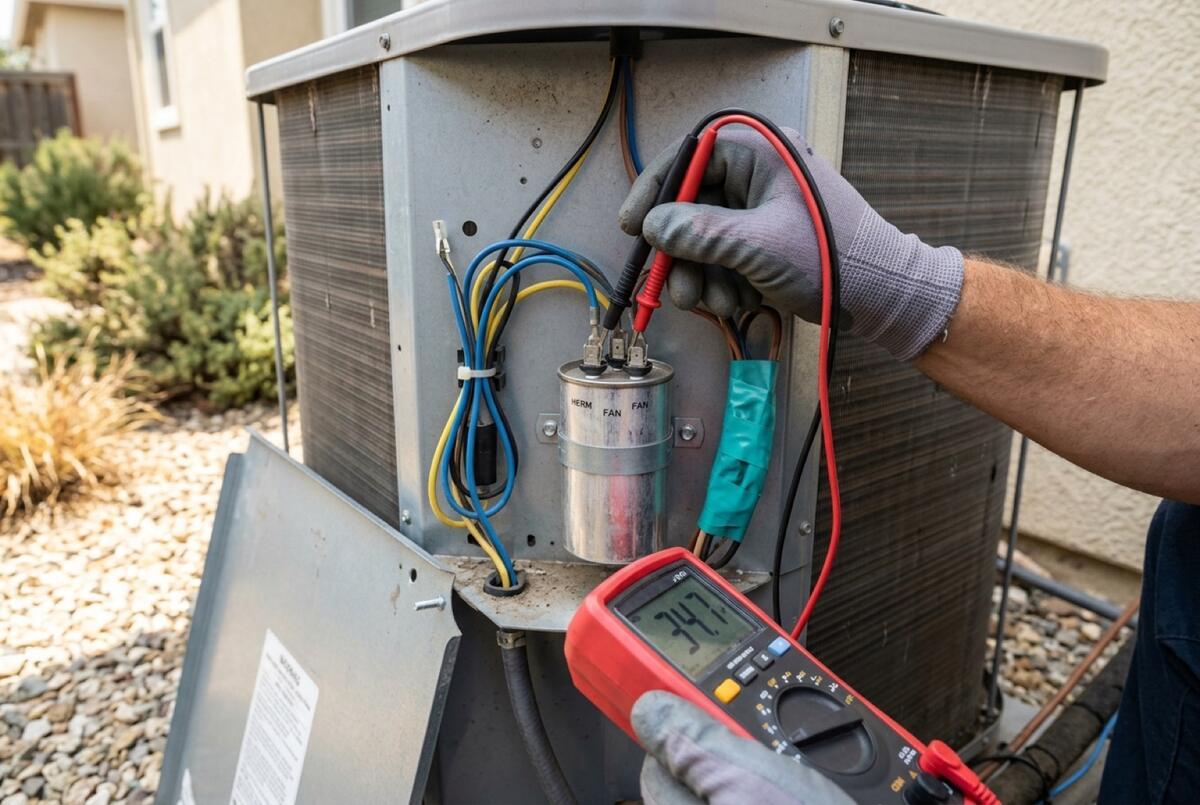
R-410A and the 2026 Refrigerant Transition, Explained for Homeowners
New AC systems use lower-GWP refrigerant, existing R-410A systems can still be serviced, and older R-410A stock can still be installed. What that means for you.
Last reviewed:
What actually changed, and when
The shift comes from the federal phasedown of hydrofluorocarbons (HFCs) — the class of refrigerants that includes R-410A — under authority Congress gave the EPA to ratchet down HFC production and use over time. Under EPA's Technology Transitions rule, residential and light commercial AC and heat pump systems carry a GWP limit of 700, with a manufacture-and-import compliance date of January 1, 2025. A May 2026 EPA final rule then removed the installation deadline for systems whose components were all manufactured or imported before that date, so the existing R-410A inventory can still be installed. GWP, global warming potential, measures how strongly a gas traps heat relative to carbon dioxide over a set period; EPA lists R-410A at a GWP of 2,090, far above the limit. Manufacturers responded by moving new systems to lower-GWP refrigerants — most commonly R-32 and R-454B — that come in under the limit. The key word is *new*: this is a rule about the refrigerant in newly installed systems, not a ban on owning or operating the system already in your home.
What R-32 and R-454B are, and why they're different to handle
The two refrigerants that dominate new residential equipment — R-32 and R-454B — both sit below the GWP-700 line, which is why manufacturers picked them. They differ from R-410A in one way homeowners should know about: both are classified A2L, meaning "mildly flammable," whereas R-410A is A1 (non-flammable). "Mildly flammable" is not the same as propane in a torch — A2L refrigerants are hard to ignite and are used safely worldwide — but it does mean the equipment, tools, and service procedures are built to a different standard, with features like leak detection built into some systems. The practical takeaway for a homeowner: new low-GWP equipment is safe and standard, but it's genuinely new hardware, so the installer's familiarity with A2L systems is a fair thing to ask about. It also means a shop's older R-410A recovery and charging tools aren't automatically the right tools for the new refrigerants.
| Refrigerant | GWP vs the 700 limit | Safety class | Status for new installs | Servicing existing systems |
|---|---|---|---|---|
| R-410A | 2,090: above the limit | A1 (non-flammable) | Only equipment manufactured or imported before January 1, 2025 may still be installed | Can still be repaired and serviced |
| R-32 | 675: below the limit | A2L (mildly flammable) | Used in new equipment | Serviced with A2L-rated tools and procedures |
| R-454B | 470: below the limit | A2L (mildly flammable) | Used in new equipment | Serviced with A2L-rated tools and procedures |
You can still service an existing R-410A system
This is the reassuring part for most homeowners. R-410A itself isn't being switched off — EPA confirms you can keep repairing an existing system, and its May 2026 final rule lets residential AC and heat pump equipment manufactured or imported before January 1, 2025 continue to be installed (NAHB summarized the change). State and local rules can still apply, so the picture isn't identical everywhere, but the headline is that a working R-410A system doesn't become unserviceable overnight the way an R-22 system effectively did. If your AC uses R-410A and runs well, the transition alone is not a reason to replace it. What's realistic to expect over a multi-year horizon is the ordinary pattern for any refrigerant past its new-equipment cutoff: as manufacturing shifts to the replacements, R-410A supply gradually tightens and pricing can drift upward — a slow trend to keep in mind on an aging system, not a switch that flips off.
How this is different from the R-22 situation
It's easy to confuse this with the older R-22 phaseout, but they're not the same severity. R-22 — the refrigerant in many systems built before roughly 2010 — is no longer produced, which is why recharging an R-22 system is expensive dead-end money and usually points toward replacement: you're paying a premium for a shrinking supply of an obsolete product to prop up old equipment. R-410A is at a much earlier stage: new systems have moved on, but servicing an existing R-410A system remains practical, and refrigerant is still being produced. So an R-22 system and an R-410A system deserve very different repair-vs-replace math — one is a strong replace signal on refrigerant grounds alone, the other usually isn't. If you're not sure which refrigerant your system uses, the equipment nameplate on the outdoor unit lists it, and any technician can confirm it during a diagnostic.
What the transition means for a repair-vs-replace decision
For most homeowners the refrigerant transition is one input, not the decision. On a healthy R-410A system, it barely registers — you keep running it. Where it starts to matter is when a large repair lands on an aging R-410A system, especially a repair that involves the sealed refrigerant circuit (a leaking evaporator coil, a failed compressor). At that point you're weighing a significant repair cost against a system that's already deep into its service life, and the gradual tightening of R-410A supply is a reasonable thumb on the scale toward replacement — alongside age, efficiency, comfort problems, and duct condition. Our repair-or-replace guide walks through how those factors stack up, and the AC replacement cost guide frames the numbers. The refrigerant angle rarely decides the question by itself, but it does nudge a borderline older system toward the replacement side.
When the transition should factor into a decision
Weigh the refrigerant angle when:
- You're already facing a large repair on an aging R-410A system — at that point the refrigerant transition is one input among several (age, repair cost, comfort) rather than the deciding factor.
- The repair involves the sealed refrigerant circuit — a compressor or evaporator coil on an old system is expensive labor, and that's where replacement math gets serious.
- You're replacing anyway — new equipment will use a low-GWP refrigerant by default, so it's simply the current standard, not an extra decision.
- You have an R-22 system needing refrigerant work — that's the stronger replace signal, because R-22 is no longer produced.
- You're comparing quotes — a written scope should identify the refrigerant the new equipment uses (R-32, R-454B, or otherwise) so you're comparing like for like.
Servicing legacy systems: what to expect over time
If you're keeping an R-410A — or even an R-22 — system running, a few practical things follow. First, maintenance matters more on older equipment: keeping coils clean, airflow correct, and charge accurate reduces the chance of a refrigerant-circuit failure that forces the replace conversation. Second, a low refrigerant charge is never "just low" — refrigerant isn't consumed in a sealed system, so a low charge means a leak, and on an aging system the honest question is whether chasing and sealing that leak is worth it or whether it's a sign the system is near the end. Third, refrigerant handling is regulated: technicians who buy and handle these refrigerants carry EPA Section 608 certification, and venting refrigerant is prohibited, which is part of why refrigerant work is priced the way it is. None of this makes a working R-410A system a problem today; it's context for reading a repair quote on an older system with clear eyes. Our AC repair page covers how a diagnostic separates a worthwhile fix from a band-aid on a system near end of life.
What to look for in a replacement quote now
Because the refrigerant changed, a good quote should make it explicit:
- The refrigerant named — the written scope should state whether the new system uses R-32, R-454B, or another low-GWP refrigerant, so you're comparing quotes on equal footing rather than guessing.
- Matched components — the outdoor unit and indoor coil should be a designed pair for the new refrigerant; mixing mismatched parts undercuts efficiency and can affect warranty.
- Installer familiarity with A2L equipment — the new refrigerants are mildly flammable and serviced to a different standard, so it's fair to confirm the installer works with them routinely.
- Efficiency ratings in writing — SEER2 and HSPF2 figures for the proposed equipment, which also feed any utility rebate eligibility check.
- Permit handling — a change-out is permitted work in every local jurisdiction; the quote should say who pulls the permit, as our permit guide explains.
Keeping this current
Refrigerant rules are actively evolving, and the details above reflect federal guidance as of this review date. Because regulations and supply conditions can shift — and state or local rules may add requirements beyond the federal baseline — it's worth confirming the current picture before making a purchase decision on the strength of the transition alone. The primary sources are EPA's Technology Transitions restrictions by sector (opens in new tab), EPA's HFC phasedown FAQ (opens in new tab) and the NAHB summary of the R-410A final rule and 2026 update (opens in new tab); both are worth a look if you want the regulatory detail behind the summary here. When 916air scopes a replacement, we note the refrigerant the proposed equipment uses so the choice is explicit rather than assumed, and if a rebate is in play, our SMUD heat pump rebate guide covers how that separate question works.
Sources
- EPA — Frequent Questions on the Phasedown of Hydrofluorocarbons (opens in new tab)
- NAHB — EPA HVAC refrigerants R-410A final rule (2026 update) (opens in new tab)
- EPA — Technology Transitions HFC restrictions by sector (updated 2026-08-28) (opens in new tab)
- EPA SNAP — Substitutes in residential and light commercial AC and heat pumps (GWP, safety class) (opens in new tab)
- EPA — Section 608 Technician Certification (refrigerant handling) (opens in new tab)
Related services
AC Repair
Find the real failure. Fix what's actually broken.
AC Installation & Replacement
Right-sized replacement with a written scope.
AC Maintenance & Tune-Ups
Ready before the first heat wave.
Heat Pump Installation
Heating and cooling on one efficient system.
Related guides
Repair or Replace Your HVAC System? A Sacramento Decision Guide
Deciding whether to repair or replace your AC or furnace? Weigh age, repair cost, refrigerant, efficiency, and comfort, plus the $5,000 test.
Cost and decisions · ReviewedSMUD Heat Pump Rebates: What Sacramento Homeowners Should Know
SMUD offers heat pump rebates for qualifying Sacramento-area homes, but amounts and eligibility change. Here's how the program works and what to verify first.
Local rules · ReviewedAC Not Cooling During a Sacramento Heat Wave? Start Here
AC running but not cooling during a Sacramento heat wave? Check the thermostat, filter, breaker, outdoor unit, and coil first — and know when it's time to call.
Troubleshooting · ReviewedDo You Need a Permit to Replace HVAC in Sacramento?
Replacing an AC or furnace in the Sacramento area needs a permit — and who issues it depends on your city or unincorporated county address. Here's how it works.
Local rules · Reviewed
Frequently asked questions
Do I have to replace my R-410A air conditioner in 2026?
No. EPA's rule applies to the refrigerant in new equipment; it doesn't force you to replace a working R-410A system. EPA says existing systems can still be repaired, and its May 2026 rule lets R-410A equipment manufactured or imported before January 1, 2025 still be installed. If your system runs well, the transition alone isn't a reason to replace it.
What refrigerant do new AC systems use now?
New residential split systems are held to EPA's GWP limit of 700 for equipment manufactured or imported from January 1, 2025 on, which in practice means lower-GWP options such as R-32 or R-454B rather than R-410A. Both are classified A2L (mildly flammable), so the equipment is built to a slightly different standard than older R-410A systems. If you're buying new, this is simply the current standard, and a written scope should state which refrigerant the proposed system uses.
Are R-32 and R-454B safe?
Yes. Both are classified A2L, meaning mildly flammable — harder to ignite than something like propane, and used safely in millions of systems worldwide. The classification mainly affects how the equipment is engineered and serviced (some systems include built-in leak detection) rather than posing a practical hazard in normal home use. The reasonable homeowner move is to make sure your installer is experienced with A2L equipment, since the tools and procedures differ from older R-410A work.
Is R-410A being phased out like R-22 was?
Not to the same degree yet. R-22 is no longer produced, which makes recharging an R-22 system expensive dead-end money. R-410A is earlier in its transition: new systems have moved to lower-GWP refrigerants, but R-410A is still produced and servicing an existing R-410A system is still practical. The two deserve very different repair-vs-replace math.
How do I know which refrigerant my system uses?
Check the equipment nameplate on the outdoor condenser unit — it lists the refrigerant type (R-22, R-410A, R-32, R-454B, etc.). If you can't find or read it, any technician can confirm it during a diagnostic. Knowing your refrigerant matters because it changes the repair-vs-replace math: an R-22 system is a strong replace signal, while a healthy R-410A system usually isn't on refrigerant grounds alone.
Will servicing my R-410A system get more expensive over time?
Likely a gradual drift rather than a cliff. As manufacturing shifts to R-32 and R-454B, R-410A supply tends to tighten and pricing can rise slowly — the normal pattern for any refrigerant past its new-equipment cutoff. For now R-410A remains produced and available for servicing existing systems. If you're weighing a large repair on an older R-410A system, it's reasonable to factor that trend in alongside age, repair cost, and comfort — but it's rarely the deciding factor on its own.
Can I get an R-410A system installed instead of a new-refrigerant one?
EPA's rule targets the refrigerant in new split-system equipment, which is why manufacturers moved new production to low-GWP refrigerants. A May 2026 EPA final rule lets R-410A equipment manufactured or imported before January 1, 2025 still be installed, but state and local rules can add requirements, and new production is built around the replacements. In practice, a new system you buy today will generally use R-32 or R-454B — and there's no comfort or reliability reason to seek out R-410A instead.
Does the refrigerant transition affect heat pumps too?
Yes — the GWP-below-700 rule applies to new residential split systems including heat pumps, not just air conditioners, since they use the same refrigerant circuits. New heat pumps ship with low-GWP refrigerants like R-32 or R-454B by default. If you're weighing a heat pump for other reasons (efficiency, electrification, a possible utility rebate), the refrigerant is simply the current standard rather than a separate decision; see our SMUD heat pump rebate guide for the rebate side of that question.
Talk to someone who explains first
916air diagnoses the real problem and puts your options in writing. Send your details to get started.