Ductwork & Airflow Services in Sacramento
A hot upstairs, weak vents, and high summer bills are usually a delivery problem, not a broken AC. 916air tests airflow, finds where the ducts are leaking or undersized, and fixes the path the conditioned air actually takes.
- Licensed technicians
- Diagnostic-first
- Written options
Why do some rooms stay hot when the AC works?
Why a hot upstairs is usually a duct problem
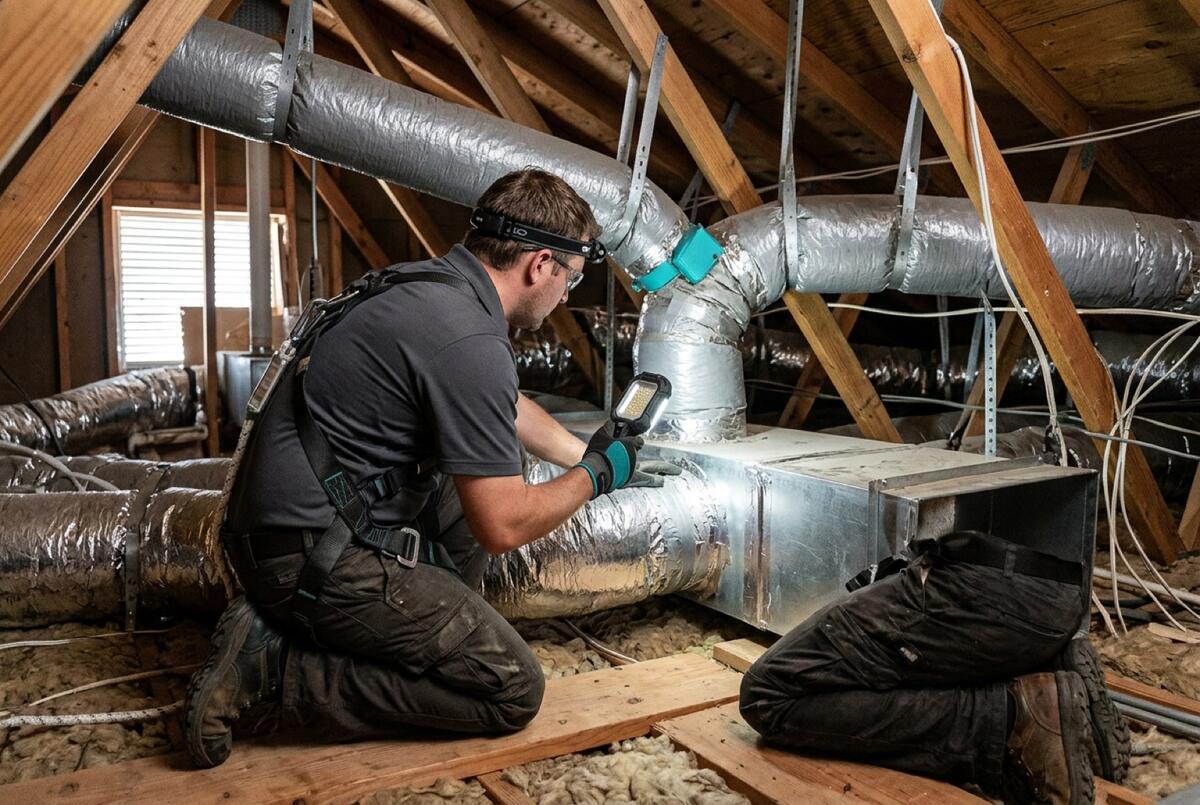
When one floor or one room won't keep up, the equipment is rarely the culprit — the delivery is. Supply runs that leak lose conditioned air into the space around them before it reaches the register. Undersized or too-few returns starve the system of the air it needs to move. Poor balance sends too much to the near rooms and too little to the far ones. A diagnostic that measures airflow tells us which of these is happening, so we fix the actual restriction instead of just adding refrigerant or blaming the AC. If the equipment itself checks out clean, our AC repair diagnostic hands off to an airflow investigation rather than throwing parts at a delivery problem.
Ductwork & Airflow by city
Each city page is written for that city's permits, electric utility, and housing stock — not a swapped city name.
- Ductwork & Airflow in SacramentoSMUD electric / PG&E gas
- Ductwork & Airflow in Elk GroveSMUD electric / PG&E gas
- Ductwork & Airflow in RosevilleRoseville Electric Utility electric / PG&E gas
- Ductwork & Airflow in FolsomSMUD electric / PG&E gas
- Ductwork & Airflow in Rancho CordovaSMUD electric / PG&E gas
- Ductwork & Airflow in Citrus HeightsSMUD electric / PG&E gas
- Ductwork & Airflow in CarmichaelSMUD electric / PG&E gas
- Ductwork & Airflow in Fair OaksSMUD electric / PG&E gas
- Ductwork & Airflow in West SacramentoPG&E electric / PG&E gas
- Ductwork & Airflow in DavisValley Clean Energy (generation) + PG&E (delivery) electric / PG&E gas
Common signs and when to call
- The upstairs stays hot while the downstairs cools fine (or one room never keeps up)
- Airflow from some vents is weak even with the blower running at full speed
- Summer bills climb while comfort gets worse, a sign conditioned air is leaking before it arrives
- Rooms far from the equipment are always the last to reach temperature
- The system runs constantly but the house never quite catches up
- You can see disconnected, crushed, or sagging duct runs in the attic or crawlspace
- The house is dusty, which can point to ducts pulling in attic or crawlspace air
- The blower is loud or the return grille whistles, a common sign of undersized returns and high static pressure
- Registers closest to the air handler blast air while the far bedrooms barely move any
Duct leakage and static pressure — the numbers behind weak vents
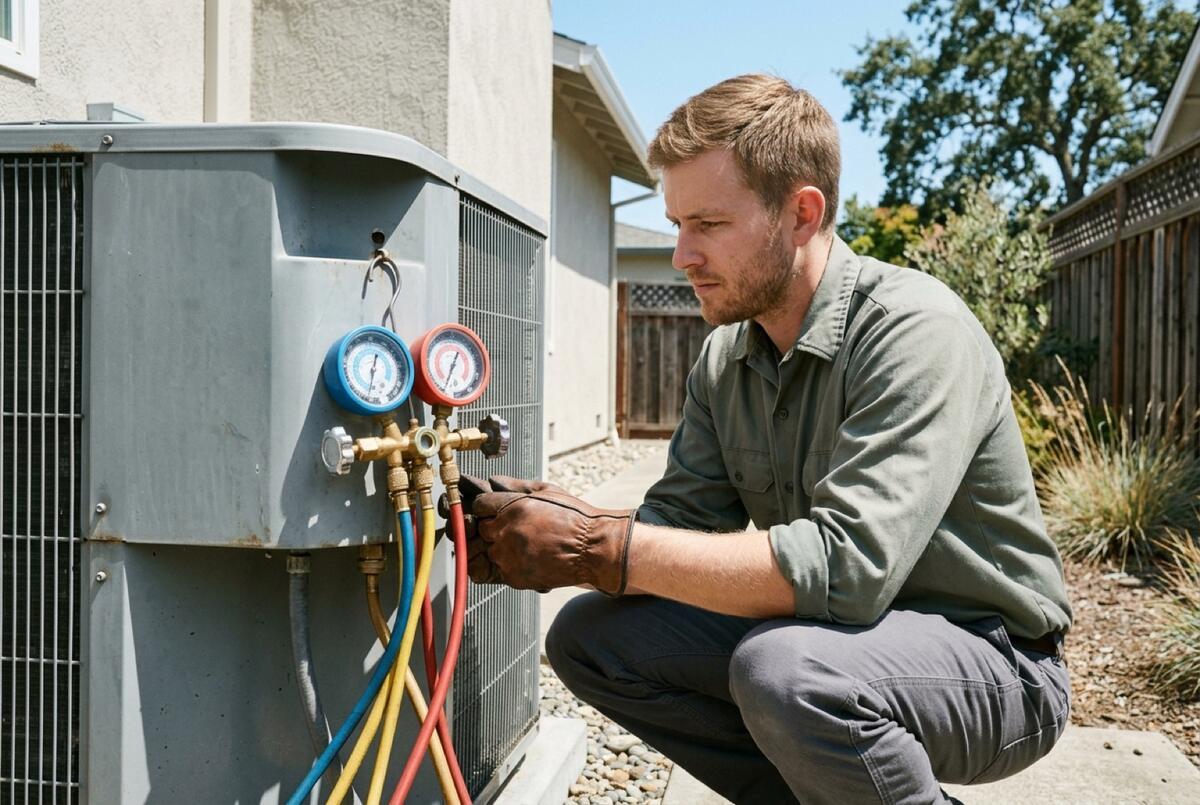
Two measurements explain most airflow complaints: how much air leaks out of the ducts, and how hard the blower has to push to move air through them. Duct leakage is conditioned air escaping through gaps at joints, boots, and the air-handler cabinet before it ever reaches a register — in older systems it's common for a meaningful share of the air the equipment produces to be lost this way. Static pressure is the resistance the blower fights against; when returns are undersized, filters are too restrictive, or runs are crushed and kinked, static pressure climbs, airflow drops, and the blower works harder for less delivered air. High static pressure also shortens equipment life and can freeze an AC coil or overheat a furnace. Measuring both tells us whether to seal, resize, or reroute — instead of guessing. When a coil keeps icing over, the cause is often airflow, not refrigerant, which is why we test the delivery side before anyone touches the refrigerant circuit.
| Problem | What it does | Usual fix |
|---|---|---|
| Supply leaks | Conditioned air escapes into the attic before it reaches the register | Seal joints, boots, and the air-handler cabinet |
| Undersized returns | Starves the blower, raises static pressure, and caps capacity | Add or enlarge returns |
| High static pressure | Airflow drops and the blower works harder; can freeze an AC coil or overheat a furnace | Correct the restriction: filter, crushed runs, or return size |
| Poor balance | Near rooms get too much air and far rooms too little | Balance or resize the runs |
| Slumped attic insulation | Even sealed ducts deliver warm air to the far rooms | Re-insulate, reroute, or serve the room another way |
Return sizing — the half of the system nobody looks at
Every cubic foot of air a system supplies has to come back to it through a return, and returns are the most commonly undersized part of an older home's duct system. A system can have healthy supply runs and still be strangled by a single small return grille or a return path blocked by closed doors. Undersized returns raise static pressure, make the blower loud, and cap the whole system's capacity no matter how large the AC or furnace is — which is why upsizing equipment without fixing the returns usually disappoints. We check that the return area matches what the blower needs to move, add or enlarge returns where they fall short, and make sure air has a real path back from the rooms that need it most. Getting the returns right is often the single change that makes a struggling system finally keep up, and it's worth confirming before you weigh a replacement.
What testing and sealing actually involve
We measure airflow and static pressure, and inspect the duct runs for leaks, disconnections, crushed sections, and undersized returns. Sealing closes the leaks at joints and connections so conditioned air stays in the duct. Where a run is undersized or a return is inadequate, resizing or adding capacity fixes the restriction at its source. The goal is to restore the airflow the equipment was rated for — often the difference between a system that struggles and one that keeps up. Because sealed, right-sized ducts also change what a system needs to move air, duct work is best coordinated with any AC maintenance or equipment replacement rather than treated as an afterthought.
Older Sacramento ducts and hot attics
The local pattern we see most:
- Attic duct runs sit in air far hotter than the outdoor reading during valley heat waves, so every leak dumps cooling into brutally hot attic space and pulls that heat into the air stream
- Older homes often have brittle, taped-and-failing connections that have loosened over decades, along with duct board or flex runs that have sagged and kinked
- Undersized returns are common in older Sacramento housing stock and quietly cap the whole system's capacity
- Leaky returns in an attic or crawlspace pull hot, dusty air into the system, which shows up as both weak cooling and household dust
- Insulation that has slumped off attic runs lets summer heat soak into the supply air, so even sealed ducts can arrive warm if they're not insulated

Attic-run heat gain — why sealed ducts still arrive warm
Sealing stops air from leaking out, but it doesn't stop heat from soaking in. During a valley heat wave an attic can run far hotter than the outdoor temperature, and any supply duct passing through it is surrounded by that heat for the whole length of the run. If the duct insulation has slumped, compressed, or fallen away — which is common in older attics — the cooled air picks up heat on its way to the far bedrooms and arrives noticeably warmer than it left the coil. That's why the rooms at the end of the longest attic runs are usually the last to cool. Addressing heat gain means checking duct insulation, shortening or rerouting punishing runs where practical, and, for rooms the ducts simply can't serve well, weighing whether a ductless mini-split is a better answer than fighting the attic. We put the tradeoffs in writing so the fix matches the room, not a one-size template.
How it works
- 1
Test airflow
Measure airflow and inspect the duct runs to find leaks, restrictions, undersized returns, and balance problems.
- 2
Explain the losses
Show you where the conditioned air is going and why a room isn't keeping up, in plain language.
- 3
Options in writing
Give you the repair, sealing, or resizing options in writing, with the tradeoffs and expected result spelled out.
- 4
Fix and verify
Complete the work and re-check airflow to confirm the delivery meets the system's target before leaving.
What affects the cost
- The extent of the leaks and how many joints or connections need sealing
- Whether runs need repair, replacement, or resizing versus straightforward sealing
- Whether returns are undersized and have to be added or enlarged
- Access to the ducts in the attic or crawlspace and the condition of the existing runs
- The age and material of the existing ductwork and whether sections are beyond sealing
- Whether duct insulation has failed and needs replacing to stop attic heat gain
Related services
AC Repair
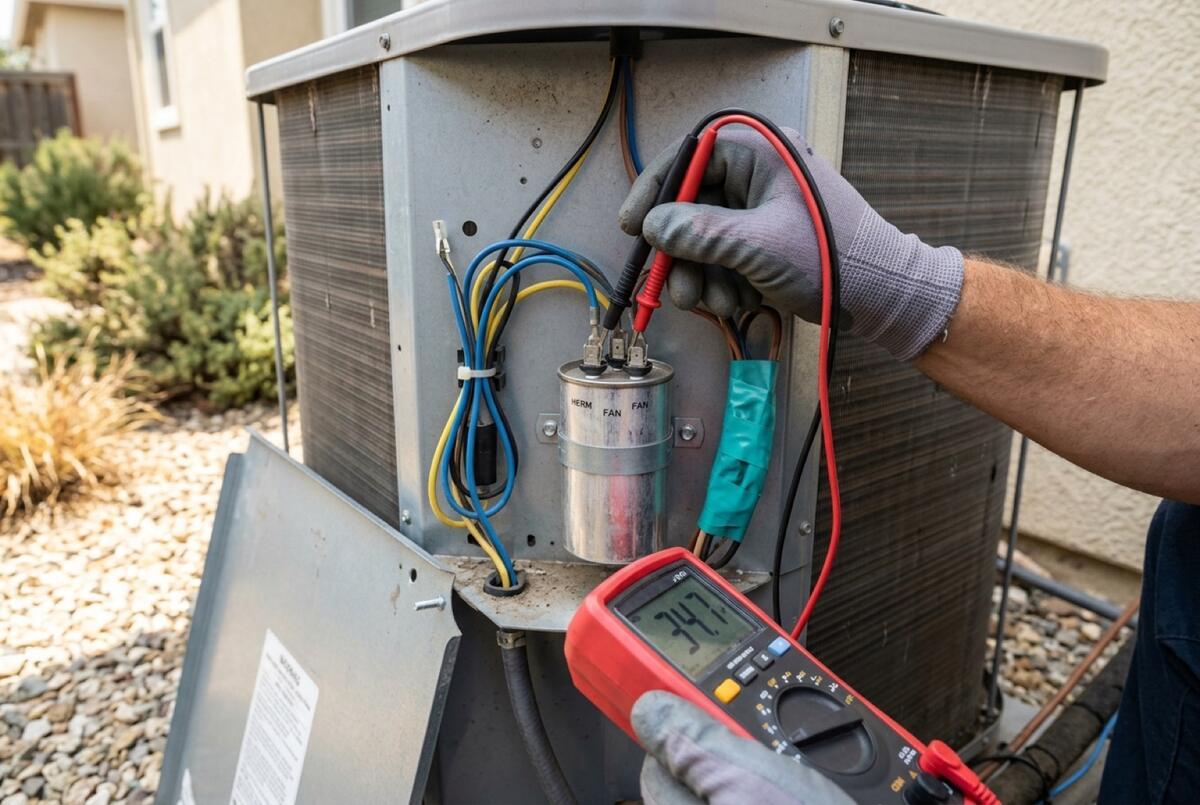
Find the real failure. Fix what's actually broken.
AC Maintenance
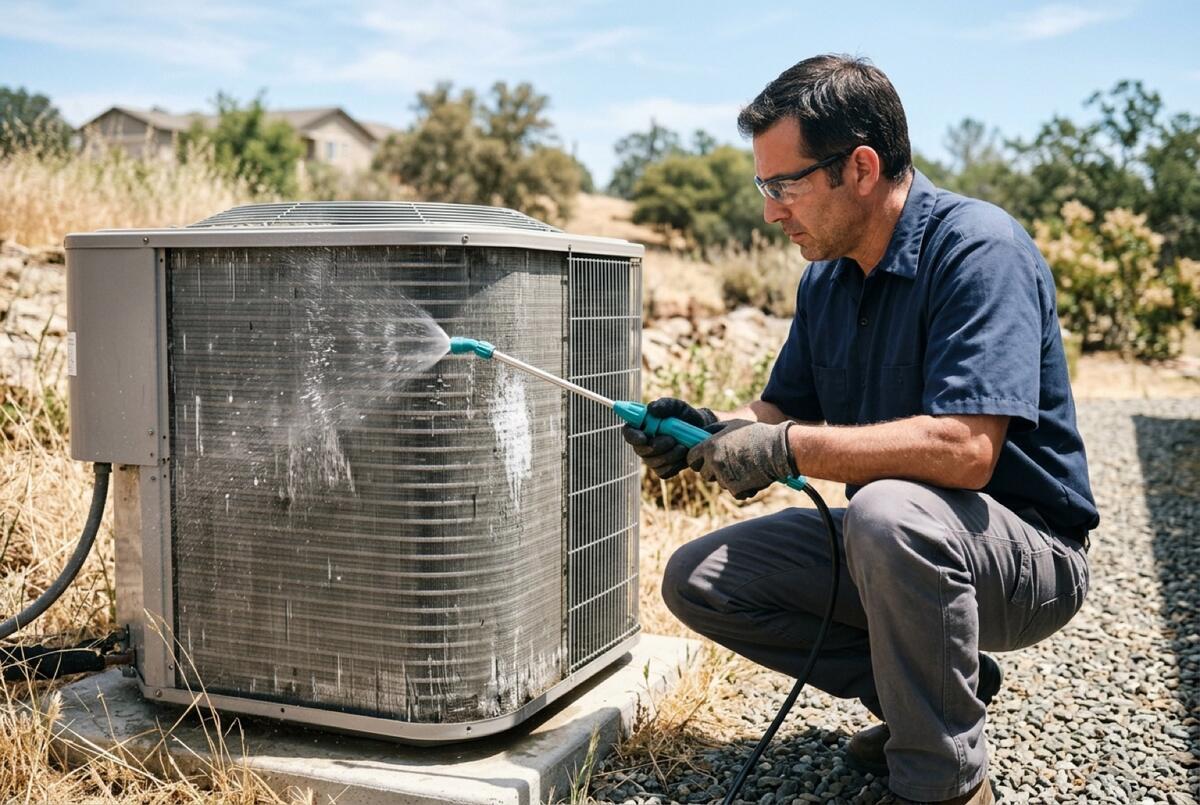
Ready before the first heat wave.
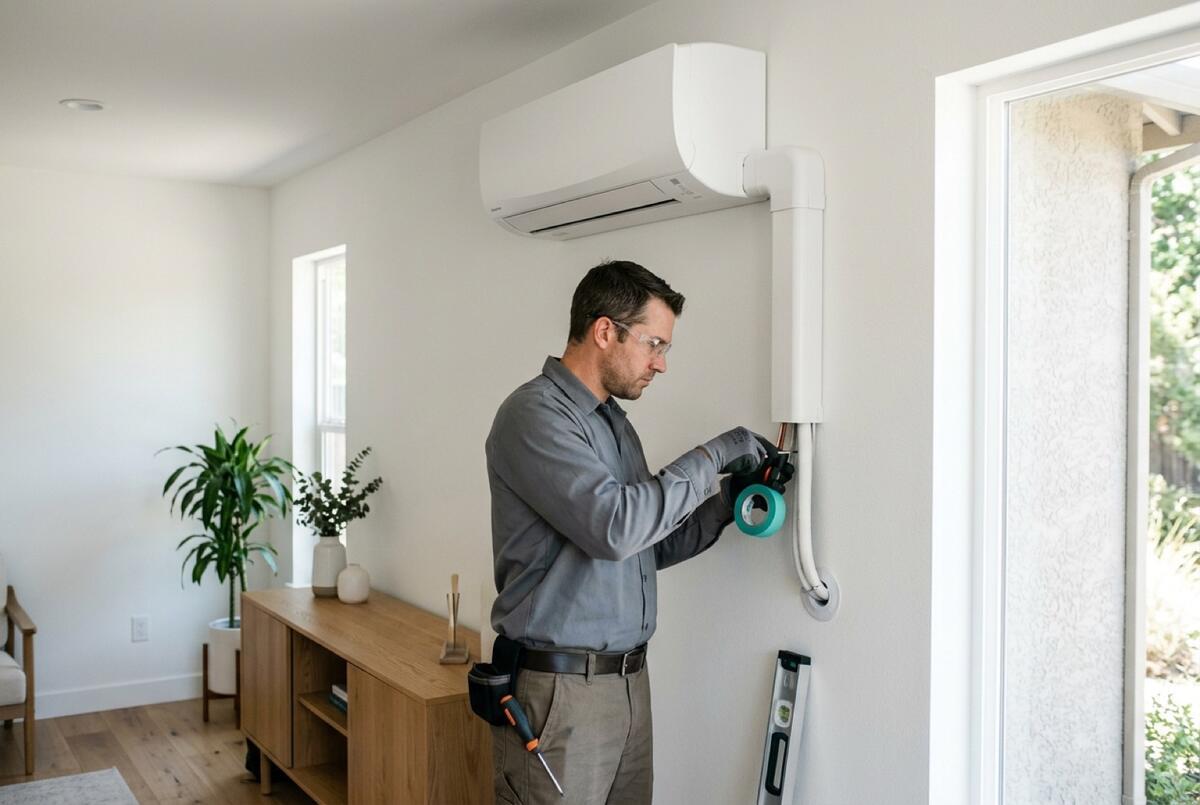
Mini-Splits
Comfort for the rooms the ducts forgot.
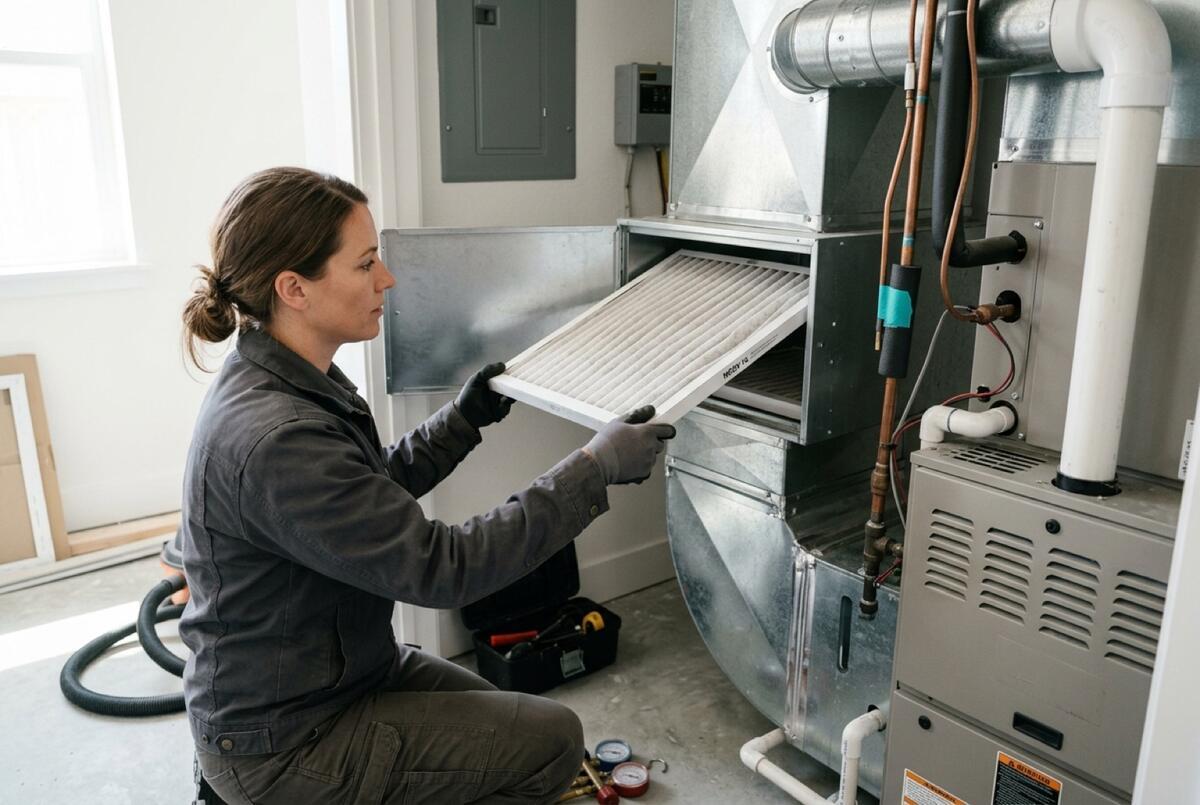
Air Quality
Cleaner air without the gimmicks.
Related guides
AC Not Cooling During a Sacramento Heat Wave? Start Here
AC running but not cooling during a Sacramento heat wave? Check the thermostat, filter, breaker, outdoor unit, and coil first — and know when it's time to call.
Guide · ReviewedRepair or Replace Your HVAC System? A Sacramento Decision Guide
Deciding whether to repair or replace your AC or furnace? Weigh age, repair cost, refrigerant, efficiency, and comfort, plus the $5,000 test.
Guide · ReviewedMini-Split vs. Central Air for Sacramento Homes
Ductless mini-split or central air? Compare ducts, zoning, two-story comfort, additions and garages, and SMUD's whole-home rebate rule as of October 2026.
Guide · Reviewed
Frequently asked questions
Why is my upstairs so much hotter than downstairs?
That's almost always a duct and airflow problem rather than a broken AC. Attic duct runs leak into extreme summer heat, and returns are often undersized, so the upstairs never gets its share of conditioned air. We test airflow to pinpoint the cause and fix the delivery instead of just adding refrigerant.
Will sealing my ducts actually lower my bills?
It can. Leaky duct runs dump conditioned air into attics and crawlspaces, so the system runs longer to reach the set temperature. Sealing keeps that air in the ducts, which usually improves comfort and reduces runtime. We measure airflow before and after so the result is verified, not assumed.
How do I know if the problem is my ducts or my AC?
That's exactly what an airflow diagnostic answers. If the equipment measures healthy but rooms still won't keep up, the delivery system is the constraint. We test both sides so you're not paying to repair equipment that was never the problem. If it turns out the equipment is the issue, our AC repair service takes it from there.
Can duct problems make my house dusty?
Yes. When returns leak in an attic or crawlspace, the system pulls in hot, dusty air from those spaces and distributes it through the house. Sealing the return side often reduces dust and improves cooling at the same time. If dust and particulate are a bigger concern, our indoor air quality options address filtration once the duct leaks are handled.
What is static pressure, and why does it matter?
Static pressure is how hard the blower has to push to move air through your ducts and filter. When it's too high — from undersized returns, crushed runs, or an overly restrictive filter — airflow drops, the blower strains, and the system can freeze a coil or overheat. We measure it as part of the diagnostic because it explains weak vents and short equipment life that a visual inspection alone would miss.
Should I fix my ducts before replacing my AC or furnace?
Usually the duct problems should be understood first. A new, larger system won't fix leaky or undersized ducts — it will just push more air into the same losses. If you're weighing a replacement, our repair-or-replace guide and cost calculator help you factor the duct condition into the decision rather than discovering it after the equipment is in.
Can better ducts help a room a mini-split would serve?
Sometimes, but not always. If a far room is fed by a long, hot attic run that no amount of sealing or resizing will fully rescue, a ductless mini-split that conditions the room directly can be the more sensible fix. We lay out both paths with the tradeoffs so you're comparing a real duct correction against a targeted alternative.
Get a ductwork estimate for your Sacramento home
916air serves the greater Sacramento region. Send the details and we'll come back with a written, site-specific scope.