Ductless Mini-Split vs. Central Air: Which Fits Your Home?
Ductless mini-split or central air? Compare ducts, zoning, two-story comfort, additions and garages, and SMUD's whole-home rebate rule as of October 2026.
Last reviewed:
Which is better, a ductless mini-split or central air?
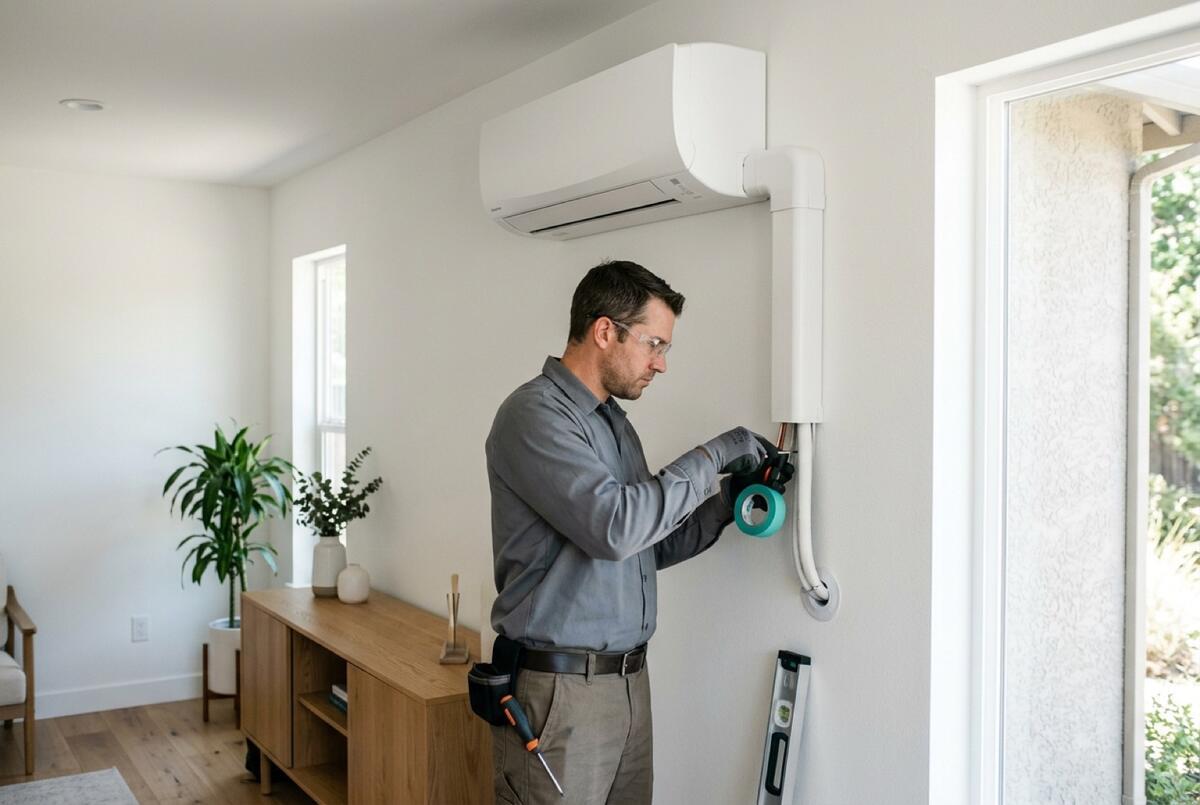
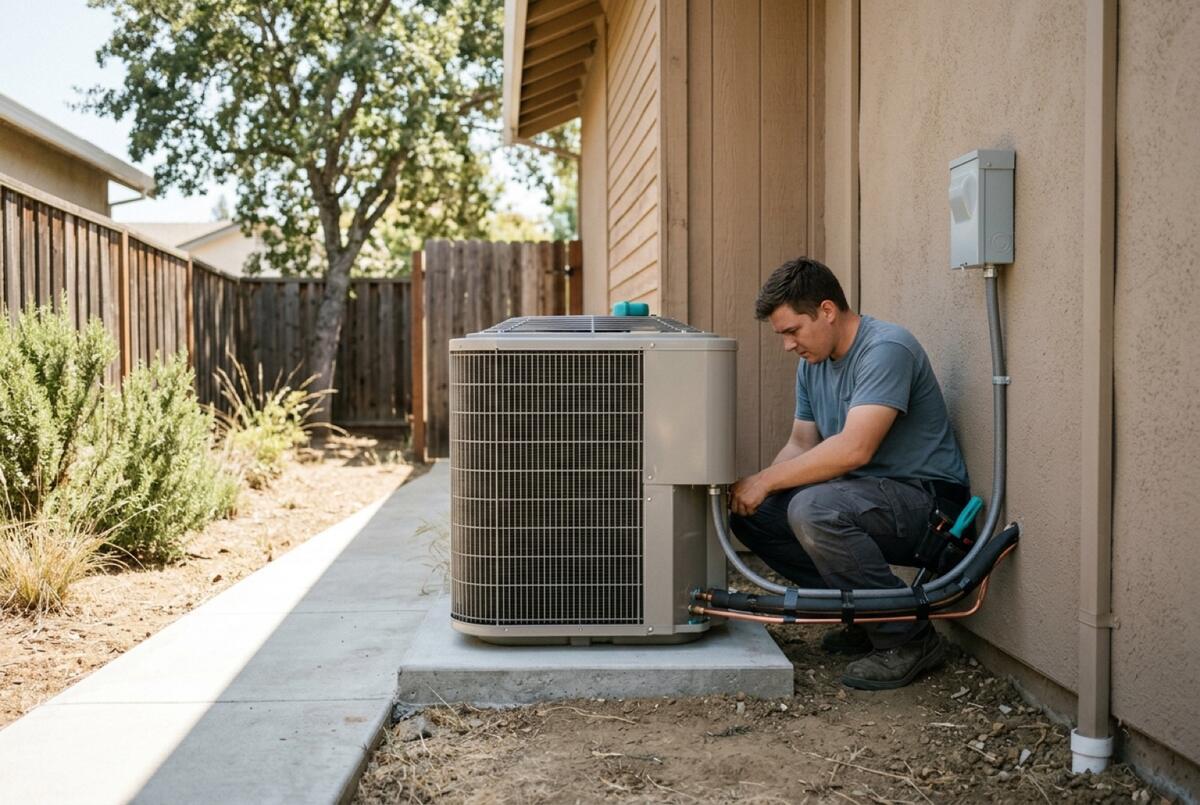
Neither wins everywhere. The deciding factor is usually the ducts: whether you have them, what shape they're in, and whether they can reach the room that's uncomfortable. A ductless mini-split runs refrigerant lines from an outdoor unit to one or more indoor heads mounted on a wall or ceiling, with no ductwork (ENERGY STAR (opens in new tab)). Central air moves conditioned air from one indoor unit through supply and return ducts.
| Factor | Ductless mini-split | Central ducted system |
|---|---|---|
| Ducts | None. Refrigerant lines run to each indoor head | Supply and return ducts, existing or new |
| Duct losses | None, because there are no ducts | ENERGY STAR estimates a typical system loses 20 to 30 percent of its air to leaks and poor connections |
| Zoning | Each head has its own setpoint | One thermostat, unless zoning dampers are added |
| Heating | Mini-splits are heat pumps, so they heat and cool | A ducted heat pump does both; an AC-only system needs a furnace |
| Indoors | A visible head in each conditioned room | Registers and return grilles only |
| Filters and drains | A washable filter and a condensate line at each head | One filter at the return and one drain at the indoor coil |
| Best fit | Additions, garage conversions, ADUs, rooms the ducts can't serve, homes with no ducts | Whole-home conditioning with sound, well-sized ducts |
| SMUD rebate (as of 2026-10-06) | Qualifies only if the system serves the entire home and meets SMUD's minimums | A ducted heat pump can qualify; the ducts must pass Title 24 testing (HERS CF3R) |
Are your ducts good enough to keep?
If they can be sealed and they reach every room, usually yes, and that favors central. If they're crushed, disconnected, badly undersized, or missing, ductless starts to win.
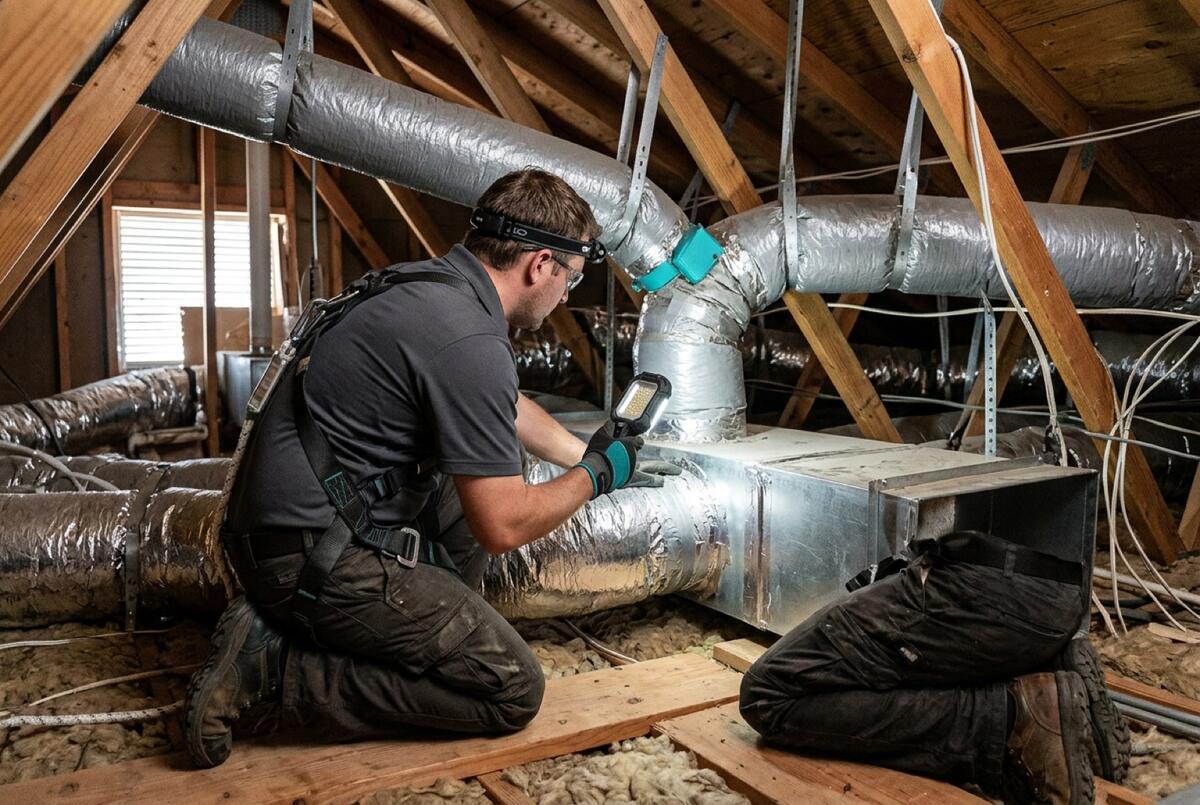
ENERGY STAR (opens in new tab) lists the warning signs of poorly performing ducts: high summer and winter bills, rooms that are hard to heat or cool, stuffy rooms that never feel comfortable, ducts in an attic, crawlspace or garage, and tangled or kinked flexible duct. Attic ducts deserve extra attention in Sacramento-area summers, when the air around them is far hotter than the air outside.
The way to know is a measurement, not a look. A duct leakage test and an airflow check show whether sealing, resizing or a partial replacement would fix the problem. A replacement system usually has to pass a Title 24 duct test as part of the permit anyway, so it's worth knowing the answer early. Our ductwork and airflow service runs those tests, and the permit guide explains where the HERS test fits.
Can a mini-split fix a hot upstairs in a two-story house?
Often, but try the cheaper fixes first. Upstairs rooms run hot because heat rises, the ducts that serve them often run through a hot attic, and a single thermostat downstairs stops cooling before the bedrooms catch up.
Start with airflow. Balancing the supply dampers, adding or enlarging an upstairs return, and sealing leaky attic ducts can close much of the gap, often for less than new equipment. Zoning dampers with a second thermostat are the next step. If the ducts simply can't deliver enough air upstairs, a ductless head in the worst room, or a small multi-zone system for the upstairs, solves it directly. ENERGY STAR (opens in new tab) lists rooms with hot or cold spots, home offices included, as a good fit for ductless.
One thing to avoid: adding a mini-split to cover for a central system that's low on charge or starved for airflow. Fix the main system first, then see what's left.
Is ductless the right choice for an addition, garage conversion or ADU?
Usually, yes. ENERGY STAR (opens in new tab) names additions and outbuildings, including garages, where extending ductwork or heating and cooling capacity is difficult, as well as rooms next to unconditioned space, like a guest room above a garage. Those are the jobs where tapping the existing system tends to fail. The main system wasn't sized for the extra square footage, and a long new duct run through a hot attic or garage loses much of what it carries.
A dedicated mini-split sized for the new space keeps the addition comfortable without overloading the rest of the house. Sizing should come from a load calculation (Manual J), not a square-foot guess. ENERGY STAR notes that equipment that's too large or too small will struggle either way.
Every jurisdiction covered on this site requires a permit for an HVAC change-out, and the office depends on where you live, so ask how a new ductless install will be permitted before work starts. For a ductless mini-split in Roseville, for instance, the office is the City's Permit Center, where HVAC and duct change-outs are a quick permit. That page covers the other local details. The ductless mini-split service page covers line-set routing, condensate and placement.
Which costs less to run?
It depends on the house more than the equipment type. Three things decide it. Duct losses: a central system with leaky attic ducts pays for air it never delivers, and a ductless system has none to lose. Zoning: mini-splits let you condition only the rooms you're using. Sizing and equipment: a well-sized, efficient central heat pump with tight ducts can be very economical for a whole house.
Upfront cost depends on the number of indoor heads, line-set length, electrical work, and on the central side, how much duct repair the job needs. We put that in a written quote for your house rather than quoting a range that may not fit it.
Do SMUD rebates cover mini-splits?
Only whole-home systems. As of October 6, 2026, SMUD's rebate page (opens in new tab) lists package, split and mini-split heat pump systems as eligible, but mini-splits must serve the entire home and meet the same minimums as any other system. That rules out a single head for one room or a garage conversion.
SMUD's rules and amounts as of 2026-10-06:
- Amounts. Gas-to-electric conversions pay $3,000 for a variable-stage system or $2,000 for a two-stage system. An electric-to-electric upgrade pays $1,000.
- Minimums. A two-stage or variable-stage compressor of at least 15.2 SEER2, and a connected thermostat.
- Ducts. Systems must pass Title 24 testing (HERS CF3R), or any new ductwork must be insulated to R-8.
- Installer. The job must be installed by a participating SMUD Contractor Network contractor, with permits and inspections complete. Verify any installer's status with SMUD.
- Outside SMUD territory. Roseville Electric runs its own programs, so check current offers with the utility. In PG&E territory, which includes West Sacramento and Davis, TECH Clean California (opens in new tab) single-family heat pump incentives have been reserved statewide since November 14, 2025.
- SMUD
- Sacramento, Elk Grove, Folsom, Rancho Cordova, Citrus Heights, Carmichael and Fair Oaks
- Roseville Electric Utility
- Roseville
- PG&E
- West Sacramento
- Valley Clean Energy (generation) + PG&E (delivery)
- Davis
When is central air still the better choice?
When the whole house needs conditioning and the ducts are sound or can be fixed. One central heat pump or AC serves every room through registers you barely notice, filters the air at one point, and has one indoor unit to maintain. With tight ducts and a correct load calculation, it's often the simplest whole-home answer. A ducted heat pump can also qualify for SMUD's conversion rebate when it replaces a gas furnace.
Many homes end up with both: central for the main house, and a ductless system for the addition or the one room the ducts never reached. If the central system is due for replacement, our guide to heat pumps vs. gas furnaces covers the heating side of that decision.
Sources
- ENERGY STAR: Ductless heating and cooling (mini-split fit and sizing) (opens in new tab)
- ENERGY STAR: Duct sealing (duct losses and warning signs) (opens in new tab)
- ENERGY STAR: Air-source heat pumps (opens in new tab)
- ENERGY STAR: HVAC maintenance checklist (opens in new tab)
- SMUD: Heating and cooling rebates (mini-split rule and amounts, checked 2026-10-06) (opens in new tab)
- TECH Clean California: Single-family incentives (status checked 2026-10-06) (opens in new tab)
- U.S. Department of Energy: Heat pumps (opens in new tab)
Related services
Ductless Mini-Splits
Comfort for the rooms the ducts forgot.
Ductwork & Airflow
Fix the delivery, not just the equipment.
Heat Pump Installation
Heating and cooling on one efficient system.
AC Installation & Replacement
Right-sized replacement with a written scope.
Related guides
Heat Pump vs. Gas Furnace in Sacramento: Cost, Comfort, and Rebates
Heat pump, gas furnace or dual fuel? Compare comfort, the utility that serves your city, SMUD rebates, and duct and panel needs, with dated official sources.
Replacement · ReviewedSMUD Heat Pump Rebates: What Sacramento Homeowners Should Know
SMUD offers heat pump rebates for qualifying Sacramento-area homes, but amounts and eligibility change. Here's how the program works and what to verify first.
Local rules · ReviewedDo You Need a Permit to Replace HVAC in Sacramento?
Replacing an AC or furnace in the Sacramento area needs a permit — and who issues it depends on your city or unincorporated county address. Here's how it works.
Local rules · Reviewed
Frequently asked questions
Are mini-splits cheaper to install than central air?
Not automatically. One or two ductless heads for an addition can cost less than extending ducts and upsizing a central system. Ductless heads in every room of a whole house can cost more than a central system on good ducts. The comparison depends on the number of heads, line-set runs, electrical work, and how much duct repair the central option needs.
Can a ductless mini-split heat my house in winter?
Yes. A mini-split is a heat pump, so it heats as well as cools. ENERGY STAR explains that the outdoor unit extracts heat from outside air even when it's cold and delivers it to the indoor heads. The Department of Energy lists ductless mini-splits among the heat pump types that suit moderate climates. Each head heats only its own zone.
How many indoor heads do I need?
It depends on the layout. Open spaces can share a head, while closed-off bedrooms usually need their own, because air from one head doesn't travel well through doors and hallways. A room-by-room load calculation (Manual J) sets the size and count. A single oversized head trying to cover several rooms is a common reason ductless installs disappoint.
Do mini-splits need maintenance?
Yes, and some of it is yours. Each indoor head has a washable filter that needs regular cleaning, and every head has a condensate line that can clog. The outdoor unit needs clear space around it. ENERGY STAR recommends an annual pre-season check-up for any system, which covers coils, drains, electrical connections and refrigerant charge.
Can I add a mini-split without replacing my central system?
Yes. ENERGY STAR notes that mini-splits can supplement an existing system as well as heat and cool a whole home. A common setup keeps central air for the main house and adds a ductless head for an addition, a garage conversion, or one hard-to-cool room. Just make sure the central system isn't hiding its own airflow problem first.
Talk to someone who explains first
916air diagnoses the real problem and puts your options in writing. Send your details to get started.