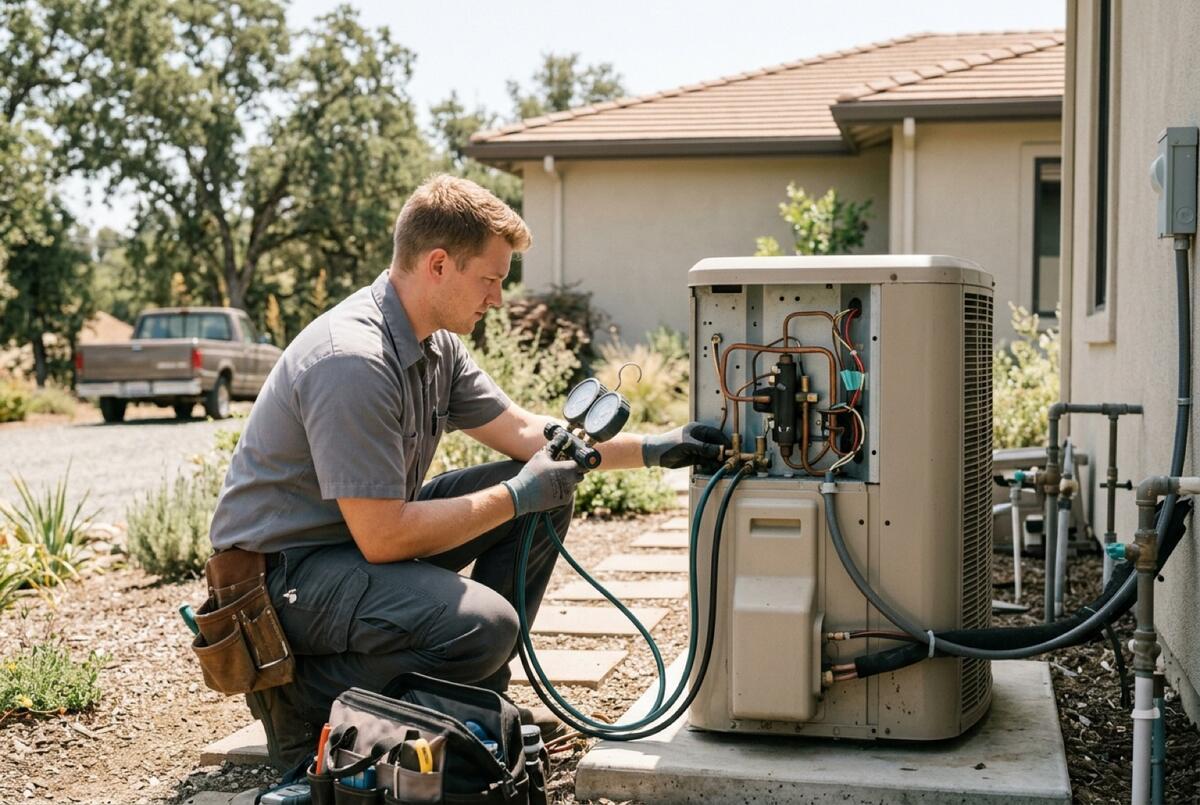
Heat Pump Repair in Sacramento
A heat pump that won't heat, won't cool, or won't switch between the two has a specific failure behind it — a reversing valve, defrost fault, refrigerant issue, or control problem. 916air isolates which one before quoting, then tells you honestly whether the repair still makes sense.
- Licensed technicians
- Diagnostic-first
- Written options
What goes wrong with a heat pump?
The failures that are unique to heat pumps
Everything that can go wrong with an AC — capacitor, contactor, refrigerant charge, airflow — can also go wrong with a heat pump, because the cooling side is the same. What's different is the hardware that lets it heat: the reversing valve that flips the refrigerant flow between heating and cooling, the defrost control that clears frost off the outdoor coil in cold weather, and the sensors and control board that coordinate it all. A stuck reversing valve or a failed defrost sensor produces symptoms that look alarming — blowing cold in heat mode, ice that won't clear — but often trace to one part. We test that hardware specifically instead of assuming it's a refrigerant problem, which is the shortcut that leads to unnecessary recharges. If the fault turns out to be on the shared cooling side, the diagnostics overlap with AC repair.
Heat Pump Repair by city
Each city page is written for that city's permits, electric utility, and housing stock — not a swapped city name.
- Heat Pump Repair in SacramentoSMUD electric / PG&E gas
- Heat Pump Repair in Elk GroveSMUD electric / PG&E gas
- Heat Pump Repair in RosevilleRoseville Electric Utility electric / PG&E gas
- Heat Pump Repair in FolsomSMUD electric / PG&E gas
- Heat Pump Repair in Rancho CordovaSMUD electric / PG&E gas
- Heat Pump Repair in Citrus HeightsSMUD electric / PG&E gas
- Heat Pump Repair in CarmichaelSMUD electric / PG&E gas
- Heat Pump Repair in Fair OaksSMUD electric / PG&E gas
- Heat Pump Repair in West SacramentoPG&E electric / PG&E gas
- Heat Pump Repair in DavisValley Clean Energy (generation) + PG&E (delivery) electric / PG&E gas
Common signs and when to call
- The system blows cold air when it should be heating (or the reverse)
- It won't switch between heating and cooling modes (often a reversing valve or control fault)
- The outdoor unit ices over and doesn't clear (a defrost-cycle problem)
- It runs constantly but can't hold the set temperature
- The outdoor unit hums but the fan won't spin, or a breaker trips on startup
- Short-cycling — turning on and off every few minutes
- Auxiliary or backup heat runs far more than it should, driving up the bill
The reversing valve and defrost cycle explained
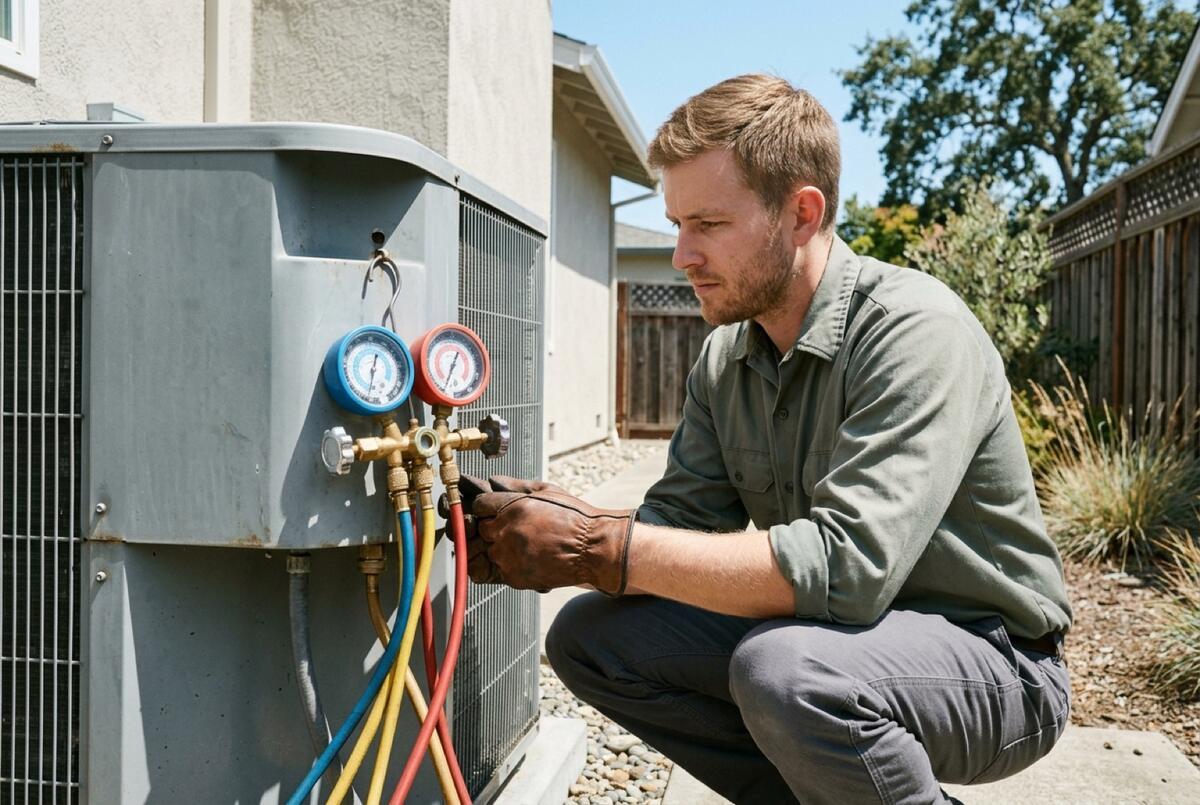
Two heat-pump-specific behaviors confuse homeowners the most. First, the defrost cycle: in cold, damp weather the outdoor coil naturally collects frost, so the system briefly reverses to melt it — you may see steam off the outdoor unit and feel cooler air inside for a few minutes. That's normal and self-correcting. It becomes a problem only when the coil ices up and *doesn't* clear, which points to a bad defrost sensor, board, or a refrigerant/airflow issue. Second, the reversing valve: it's the component that physically switches the system between heating and cooling. When it sticks or its solenoid fails, the heat pump gets stuck in one mode — commonly blowing cold air when it's supposed to heat. Telling a normal defrost from a genuine reversing-valve failure is exactly what a real diagnostic is for, so you're not paying to replace a valve that was working fine.
| What you see | Normal or fault | Likely cause |
|---|---|---|
| Steam off the outdoor unit and cooler air inside for a few minutes in cold, damp weather | Normal | The defrost cycle clearing frost from the outdoor coil |
| Ice on the outdoor coil that does not clear | Fault | A bad defrost sensor or board, or a refrigerant or airflow problem |
| Cold air while the system is set to heat | Fault | A stuck reversing valve or a failed solenoid |
| Noticeably lower output with a dirty filter or restricted return | Fault | Airflow on the delivery side |
Why the diagnostic reads the whole circuit
A heat pump's performance is a chain: refrigerant charge, airflow, the reversing valve, the defrost logic, and the controls all have to work together. Adding refrigerant to a system that's actually short-cycling on a control fault just masks the real issue and can even damage the system. Our diagnostic measures the electrical, refrigerant, and airflow side and checks the heat-pump-specific components, so the repair addresses the cause rather than the symptom. Airflow matters more on a heat pump than people expect — a dirty filter or restricted return that a furnace could shrug off will drop a heat pump's output noticeably, which is why we check the delivery side and flag ductwork and airflow problems when they're the real cause.
Written options
Example- 1.Repair the failed partA scary symptom is sometimes a small part.
- 2.Repair plus a related weaknessThe failure, plus the weak spot found on the same visit.
- 3.ReplaceWhen age, repair cost, refrigerant, and comfort math support it.
Repair-versus-replace math on a heat pump
What we weigh before recommending a repair:
- The age of the system and how the rest of it is holding up
- The refrigerant type and whether the repair touches the refrigerant circuit
- The cost of the specific failed part against the value of the remaining system life
- Whether backup heat has been carrying the load, which points to a bigger underlying problem
- Whether a replacement heat pump would qualify for current rebates worth factoring into the math
How it works
- 1
Diagnose
Measure the electrical, refrigerant, and airflow side, and test the reversing valve, defrost control, and sensors to isolate the real failure.
- 2
Explain
Walk you through what failed and why, including whether it's a heat-pump-specific part or a shared AC-side component.
- 3
Options in writing
Give you the repair options and cost in writing, with an honest read on whether the system's age and refrigerant make repair worthwhile.
- 4
Fix and verify
Complete the repair and confirm the system heats, cools, and switches modes correctly before leaving.
What affects the cost
- The specific part that failed — a defrost sensor is minor; a reversing valve or compressor is major
- Whether the refrigerant circuit is involved and how much refrigerant a recharge requires
- The refrigerant type and whether a leak has to be found and fixed first
- Access to the outdoor and indoor units and the condition of the surrounding system
- Whether the fault is on the shared cooling side or the heat-pump-specific hardware
- Whether the repair is a standalone fix or a band-aid on a system near the end of its life
See planning ranges in the Heat Pump Cost in Sacramento: Planning Ranges.
Planning tools
AC repair vs replace calculator
Weigh age, repair cost, refrigerant, and comfort to see which way the math leans.
Related services
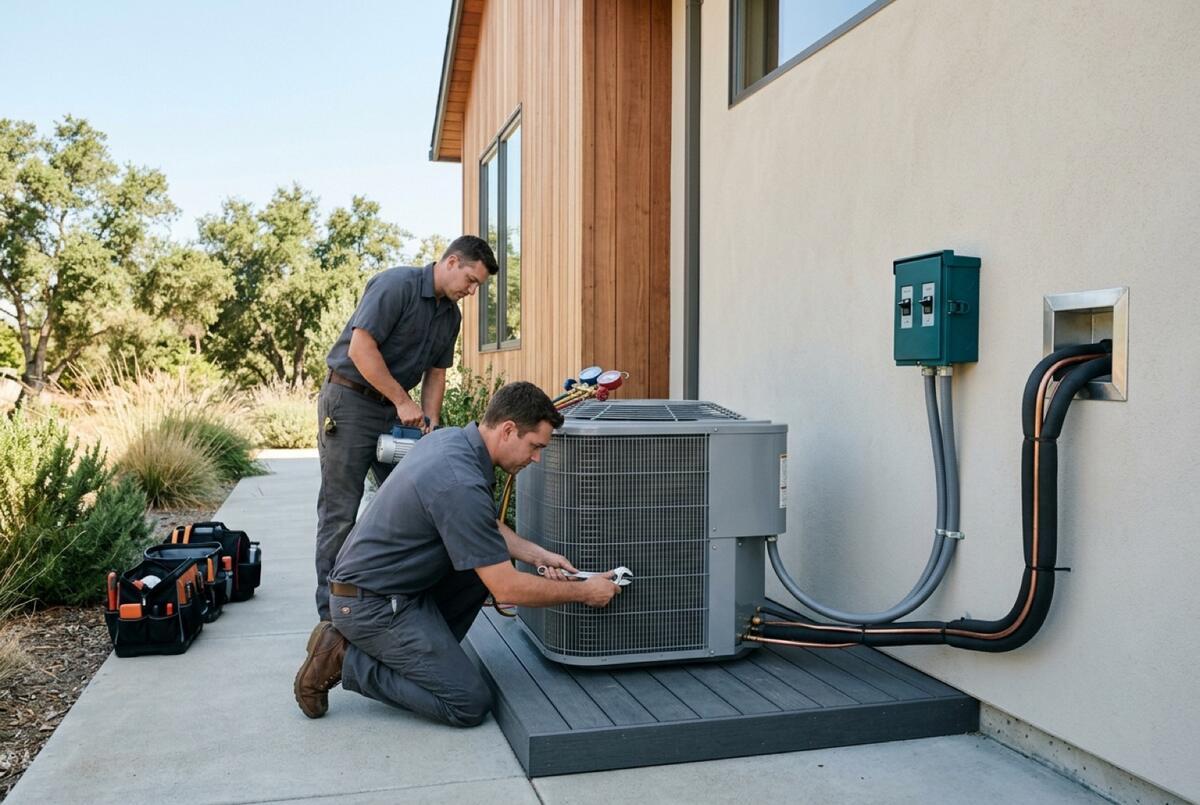
Heat Pump Install
Heating and cooling on one efficient system.
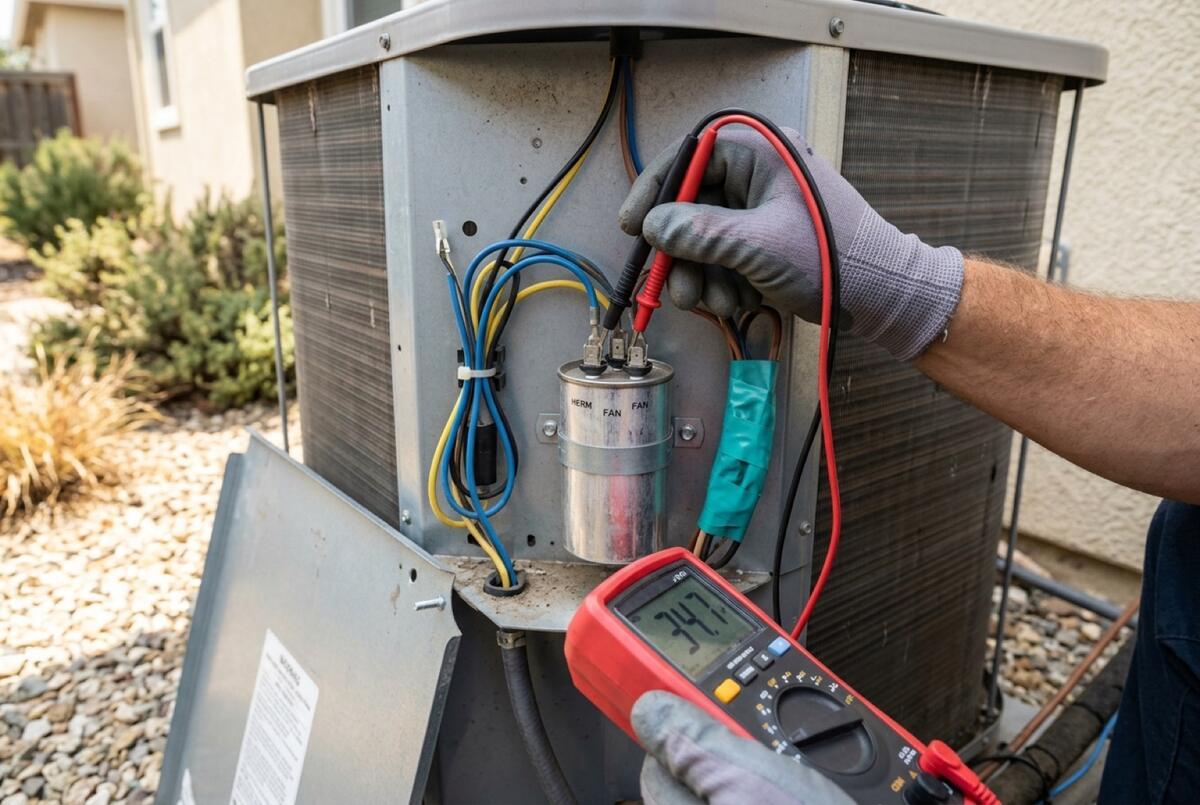
AC Repair
Find the real failure. Fix what's actually broken.
Thermostats
Controls that do what you tell them.
Ductwork & Airflow
Fix the delivery, not just the equipment.
Related guides
Repair or Replace Your HVAC System? A Sacramento Decision Guide
Deciding whether to repair or replace your AC or furnace? Weigh age, repair cost, refrigerant, efficiency, and comfort, plus the $5,000 test.
Guide · ReviewedSMUD Heat Pump Rebates: What Sacramento Homeowners Should Know
SMUD offers heat pump rebates for qualifying Sacramento-area homes, but amounts and eligibility change. Here's how the program works and what to verify first.
Guide · ReviewedHeat Pump Not Heating or Blowing Cold Air? What's Normal and What Isn't
Heat pump blowing cool air, steaming, or stuck on aux heat? What normal defrost looks like, what to check first, and when to call a technician.
Guide · Reviewed
Frequently asked questions
My heat pump is blowing cold air in heating mode. What's wrong?
That's usually one of a few things: the system is in a defrost cycle (normal and temporary), the reversing valve is stuck, or a control is misreading the mode. It can also be low refrigerant. We diagnose to tell the temporary from the actual failure before quoting anything — so you don't pay to replace a working part.
How fast can you come out?
Urgent no-heat and no-cool calls are prioritized in our scheduling. Share your address and the symptoms through the request form and we'll get back to you with timing.
Is it worth repairing an older heat pump?
It depends on the system's age, the cost of the failed part, the refrigerant type, and how the rest of the system is holding up. A defrost sensor on an otherwise healthy unit is easy math; a reversing valve or compressor on an aging system that uses older refrigerant often points toward replacement. We give you the honest comparison — our repair-vs-replace guidance is a good starting read.
Why is my backup heat running so much?
Heavy auxiliary or backup heat usually means the heat pump itself isn't carrying its share — from low refrigerant, a defrost problem, a stuck reversing valve, or a control setting. It's worth diagnosing, because backup heat (especially electric strips) is more expensive to run and the extra use is a symptom of an underlying fault, not just cold weather.
The outdoor unit is covered in ice. Is that a problem?
A light frost that clears during the defrost cycle is normal in cold, damp weather. Heavy ice that builds up and doesn't melt off is not — it usually points to a failed defrost sensor or board, low refrigerant, or an airflow restriction. Don't chip at the ice; let it be diagnosed. Running a heavily iced unit strains the system and can turn a small fault into a bigger one.
Is a heat pump repair the same as an AC repair?
Partly. The cooling side of a heat pump is identical to an AC, so capacitor, contactor, refrigerant, and airflow diagnostics overlap. The difference is the heating hardware — the reversing valve, defrost control, and sensors — which an AC doesn't have. A proper heat pump diagnostic covers both sets, which is why we don't just treat it as an AC that happens to run in winter.
Should I repair now or wait until I need heat again?
If the fault is on the reversing valve, defrost, or heating side, waiting means you're relying on expensive backup heat in the meantime and the underlying problem doesn't fix itself. If it's a cooling-season issue, timing is more flexible. We'll tell you which category your failure falls in and what waiting actually costs, so the decision is yours with the real tradeoff in front of you.
Get a heat pump repair estimate for your Sacramento home
916air serves the greater Sacramento region. Send the details and we'll come back with a written, site-specific scope.