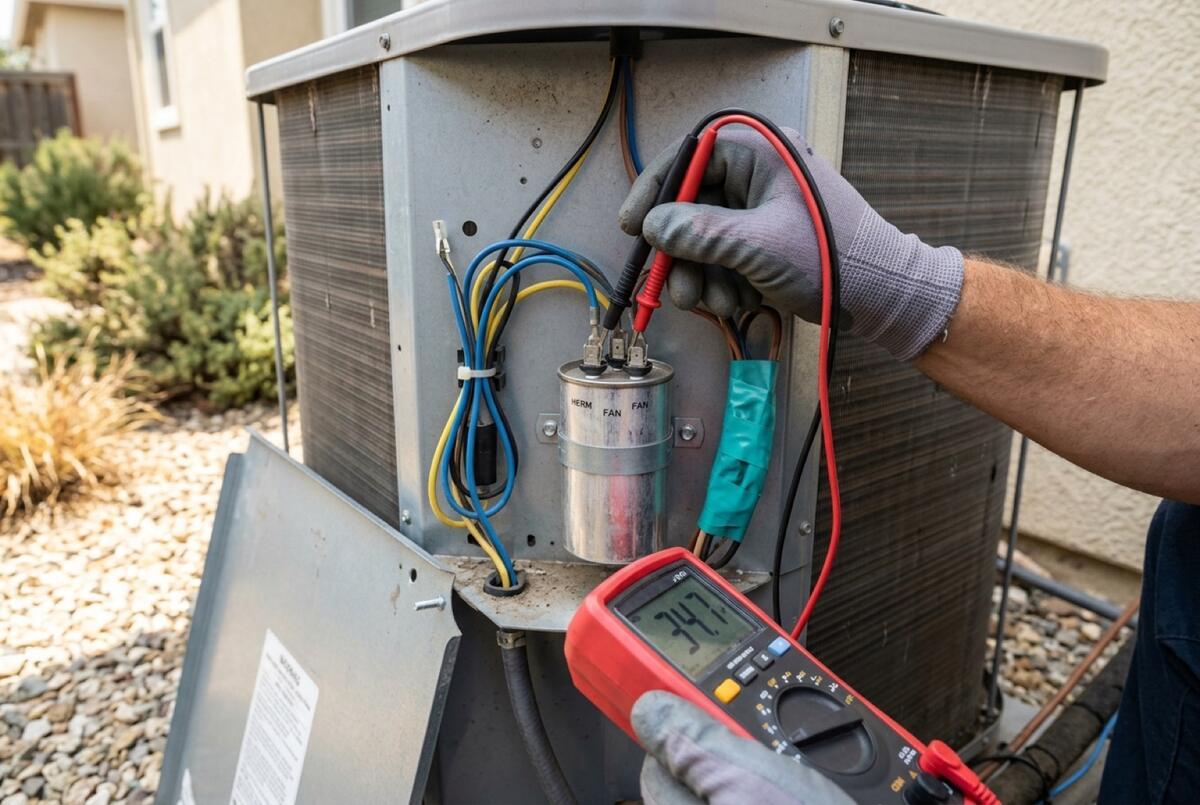
Should You Repair or Replace Your HVAC System?
Deciding whether to repair or replace your AC or furnace? Weigh age, repair cost, refrigerant, efficiency, and comfort, plus the $5,000 test.
Last reviewed:
The factors that actually decide it
No single number settles the repair-or-replace question — you weigh these together, because any one of them can be outvoted by the others. A 12-year-old system with a $250 repair and no comfort complaints is an easy repair; the same age with a failed compressor and a hot upstairs is a different conversation.
Weigh these together, not in isolation:
- Age — a well-maintained central AC typically lasts about 15 to 20 years and a gas furnace often 15 to 30, per industry service-life data. Past the midpoint of that window, every repair buys less remaining life, so age quietly raises the real cost of "just fixing it."
- Repair cost — a small fix on a sound system is easy math. A major repair — compressor, evaporator or condenser coil, or a cracked heat exchanger — on an aging system is where replacement starts to compete.
- Refrigerant — an R-22 system is a strong replace signal, because R-22 is no longer produced and refrigerant repairs on it are expensive dead-end money. An R-410A system is a weaker signal; see the R-410A refrigerant transition guide for why.
- Reliability — two or more breakdowns in the last couple of years is a system telling you it's becoming unreliable, not just unlucky, and the repairs tend to accelerate as it ages.
- Efficiency — an aging system that still runs may be doing it on a fraction of its original efficiency, which shows up on every SMUD or PG&E summer bill during a valley heat wave.
- Comfort — if the house is uneven, humid, or never quite comfortable even when the system runs, the equipment may no longer fit the home, and a repair won't fix a fit problem.
- Duct condition — a new system pushing air through leaky, undersized 1960s ducts can't deliver its rated performance; sometimes the real fix is ductwork and airflow, not the box outside.
The $5,000 test, explained
It's a rule of thumb, not a verdict: multiply the system's age in years by the repair estimate in dollars. If the product is over $5,000, that points toward replacement; comfortably under, and a repair usually makes sense. A 5-year-old system with a $600 repair (5 × 600 = $3,000) leans repair. A 15-year-old system with a $2,000 repair (15 × 2,000 = $30,000) leans hard toward replacement. The test captures something real — money spent on an old system has a short runway — but it's only a starting point. A scary symptom is sometimes a $300 capacitor, and a good diagnostic can change the answer. Treat it as the opening question, not the closing argument.
| System age | Repair estimate | Age × cost | Lean |
|---|---|---|---|
| 5 years | $600 | $3,000 | Repair: under $5,000 |
| 12 years | $250 | $3,000 | Repair: under $5,000 |
| 15 years | $2,000 | $30,000 | Replace: well over $5,000 |
How age changes the math
Age doesn't just add years — it changes what a repair is worth. In the first third of a system's life, a repair restores something with most of its runway ahead of it, so almost any reasonable fix pays off. In the middle third, it depends on the size of the repair. In the final third — a central AC past roughly 15 years, a furnace deep into its teens or twenties — you're weighing a repair against a system that could need the next one at any time, often on parts that are getting harder to source. This is why the same $1,500 repair is obviously worth it at year five and obviously questionable at year eighteen. It isn't that old systems aren't fixable; it's that each fix buys less, and the odds of the next failure keep climbing.
Refrigerant: the factor that can decide it on its own
Refrigerant type is the one factor that can settle the question by itself. If your system runs on R-22, any repair touching the refrigerant circuit is expensive dead-end money — R-22 is no longer produced, so the refrigerant itself is costly and getting scarcer, and you'd be pouring it into an old system. That combination usually points to replacement whenever the refrigerant circuit is involved. An R-410A system is a much weaker signal: those can still be serviced, and the low-GWP transition mainly affects what new equipment ships with, not whether you can keep running what you have. New systems now use lower-GWP refrigerants like R-32 or R-454B by default, so if you replace, that choice is made for you. The full picture — including what the transition does and doesn't require — is in the refrigerant transition guide.
Efficiency and the SEER2 question
Efficiency is the factor homeowners underweight most, and in Sacramento's long cooling season it matters. Cooling efficiency is now rated in SEER2 (the current test standard that replaced SEER), and heating efficiency for a furnace in AFUE. A system installed 15 to 20 years ago was rated far lower than today's minimums even when it was new — and it has lost efficiency since. On a home that runs the AC hard from June through September, the gap between an old, degraded system and a modern high-efficiency one shows up on the utility bill month after month. That doesn't mean efficiency alone justifies replacing a working system; it means that when a big repair already has you on the fence, the ongoing energy savings belong in the calculation, not as an afterthought. A heat pump can also change the equation by handling both heating and cooling on electricity, which is worth modeling if you're replacing anyway.
Run your numbers in the calculator
Rather than eyeball it, you can put your own answers into the repair-vs-replace calculator. It uses the same factors above — age, repair estimate, refrigerant, breakdown history, and comfort — applies the $5,000 test, and returns a plain-language lean toward repair, replace, or a genuine toss-up, with the reasoning for each point spelled out. It's transparent math you can see, not a black-box quote. If replacement is in play, the HVAC replacement cost calculator gives a planning range for what a new system might run, and the AC replacement cost guide and heat pump cost guide break down what actually drives the number.
When repair is clearly the right call
Replacement isn't the default answer, and a good contractor shouldn't push it when the math doesn't support it. A repair usually wins when the system is newer (roughly 0 to 7 years), the fix is small and non-refrigerant, it's the first real breakdown, the ducts are sound, and comfort has otherwise been fine. In those cases a targeted AC repair is the smarter money, and replacing early throws away good remaining life. 916air's approach is to diagnose first, show you the options in writing, and recommend replacement only when the numbers actually favor it.
When replacement usually pencils out
The picture flips when several factors stack up: a system in its late teens or beyond, a large repair on top of that age, R-22 refrigerant, a pattern of repeated breakdowns, rising summer bills, and ongoing comfort complaints. Any one of those alone might not be decisive, but together they mean you'd be pouring money into a system near the end of its life. At that point a written replacement scope — right-sized equipment per a proper load calculation, duct and electrical needs, permit requirements, and any rebate basics that may apply — is worth comparing against one more repair. When you compare quotes, weigh the whole scope, not just the sticker: sizing method, duct sealing, the refrigerant the new system uses, and warranty all change the real value.
A note on rebates and tax credits
Incentives can shift the replacement math, but only if they actually apply to your project — so treat them as a maybe, not a discount you can bank. Qualifying heat pump projects may be eligible for SMUD residential rebates, but eligibility and contractor participation requirements have to be met, and program amounts and availability change; verify the current program before counting on any figure. On the federal side, the Energy Efficient Home Improvement Credit (25C) covers improvements made through December 31, 2025, and the IRS's draft 2026 instructions say it can't be claimed for property placed in service after that date unless the law changes. The honest way to use incentives in a decision is to confirm current eligibility first, then factor in only what's real.
- SMUD
- Sacramento, Elk Grove, Folsom, Rancho Cordova, Citrus Heights, Carmichael and Fair Oaks
- Roseville Electric Utility
- Roseville
- PG&E
- West Sacramento
- Valley Clean Energy (generation) + PG&E (delivery)
- Davis
Related services
AC Repair
Find the real failure. Fix what's actually broken.
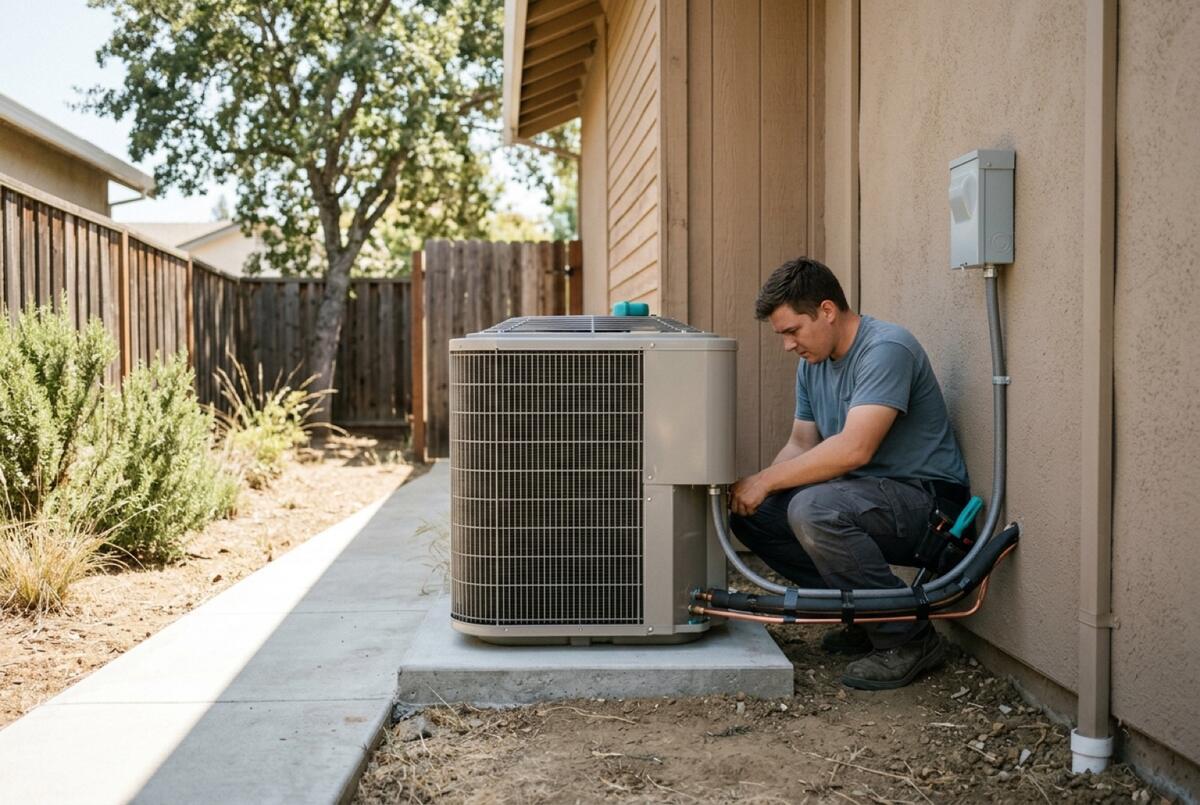
AC Installation & Replacement
Right-sized replacement with a written scope.
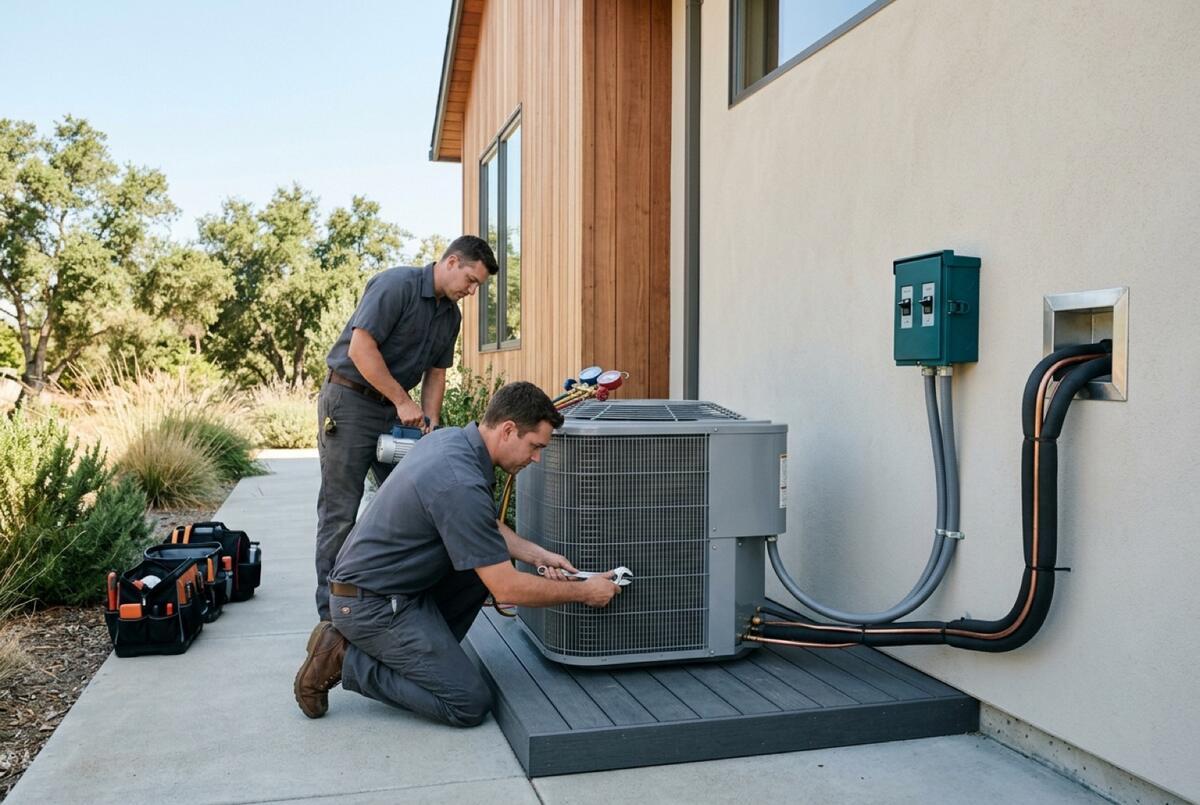
Heat Pump Installation
Heating and cooling on one efficient system.
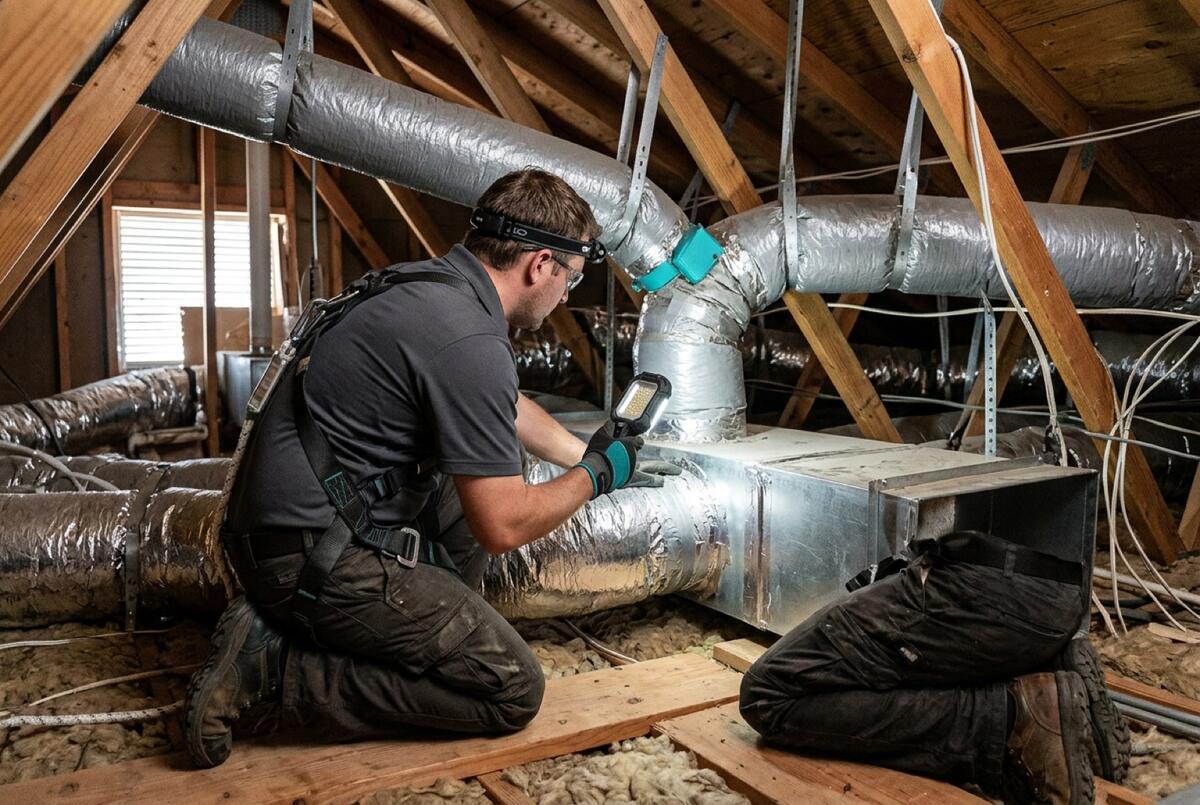
Ductwork & Airflow
Fix the delivery, not just the equipment.
Related guides
The R-410A Refrigerant Transition: What It Means for Your AC
New AC systems use lower-GWP refrigerant, existing R-410A systems can still be serviced, and older R-410A stock can still be installed. What that means for you.
Cost and decisions · ReviewedAC Not Cooling During a Sacramento Heat Wave? Start Here
AC running but not cooling during a Sacramento heat wave? Check the thermostat, filter, breaker, outdoor unit, and coil first — and know when it's time to call.
Troubleshooting · ReviewedSMUD Heat Pump Rebates: What Sacramento Homeowners Should Know
SMUD offers heat pump rebates for qualifying Sacramento-area homes, but amounts and eligibility change. Here's how the program works and what to verify first.
Local rules · Reviewed
Frequently asked questions
What's the $5,000 rule for HVAC repair or replacement?
Multiply the system's age in years by the repair estimate in dollars. If the result is over $5,000, it points toward replacement; well under, and a repair usually makes sense. For example, a 15-year-old system with a $2,000 repair clears the threshold easily, while a 5-year-old system with a $600 repair doesn't. It's a useful gut check, not a final verdict — a diagnostic can still change the answer.
How long should an AC or furnace last?
Industry service-life data puts a well-maintained central AC at roughly 15 to 20 years and a gas furnace often 15 to 30, though Sacramento's long, hard cooling season and duct condition affect the real number. Age isn't a hard expiration date, but past the midpoint of that window each repair buys less remaining life, which is why age carries so much weight in the decision.
My AC is old but the repair is cheap. Should I still replace it?
Not necessarily. A small, non-refrigerant repair on an old system can be worth doing, especially if it's the first breakdown and comfort has been fine. Age matters most when it's paired with a big repair, R-22 refrigerant, repeated breakdowns, rising bills, or comfort problems. The repair-vs-replace calculator weighs those together so you're not deciding on age alone.
Does the refrigerant type change the decision?
Yes, significantly. An R-22 system is a strong replace signal because R-22 is no longer produced, so refrigerant repairs are expensive dead-end money. An R-410A system is a much weaker signal — those can still be serviced, and the transition mainly affects new equipment, which now ships with lower-GWP refrigerants like R-32 or R-454B. Our refrigerant transition guide covers the current facts.
Is a more efficient system worth the higher price?
It depends on how hard you run it. In Sacramento's long cooling season, the gap between an old, degraded system and a modern high-efficiency one (rated in SEER2 for cooling, AFUE for a furnace) shows up on every summer utility bill. Efficiency alone rarely justifies replacing a healthy system, but when a large repair already has you on the fence, the ongoing energy savings belong in the math.
Do my ducts affect whether I should replace the system?
Yes. A new system is only as good as the ducts delivering its air. Leaky, undersized, or deteriorated ducts — common in older Sacramento-area homes — can keep even new equipment from reaching its rated performance and comfort. Sometimes the better spend is duct and airflow correction rather than, or alongside, new equipment, which is why a good scope looks at the whole system.
Are there rebates or tax credits that make replacement cheaper?
Possibly, but only if your specific project qualifies. Qualifying heat pump projects may be eligible for SMUD residential rebates when eligibility and contractor requirements are met, and program amounts change, so verify the current program before relying on a figure. The federal 25C credit covers improvements made through December 31, 2025 and shouldn't be assumed available after that unless the law changes. Confirm current eligibility, then factor in only what's real.
How much does a replacement cost if I decide to replace?
It depends on the system type, home size, ductwork, and efficiency, so it's a range rather than a single number. Our HVAC replacement cost calculator gives a Sacramento-area planning range based on your inputs, and the cost guides break down what drives the number. Any figure is a planning estimate until an on-site inspection produces a written quote.
Talk to someone who explains first
916air diagnoses the real problem and puts your options in writing. Send your details to get started.