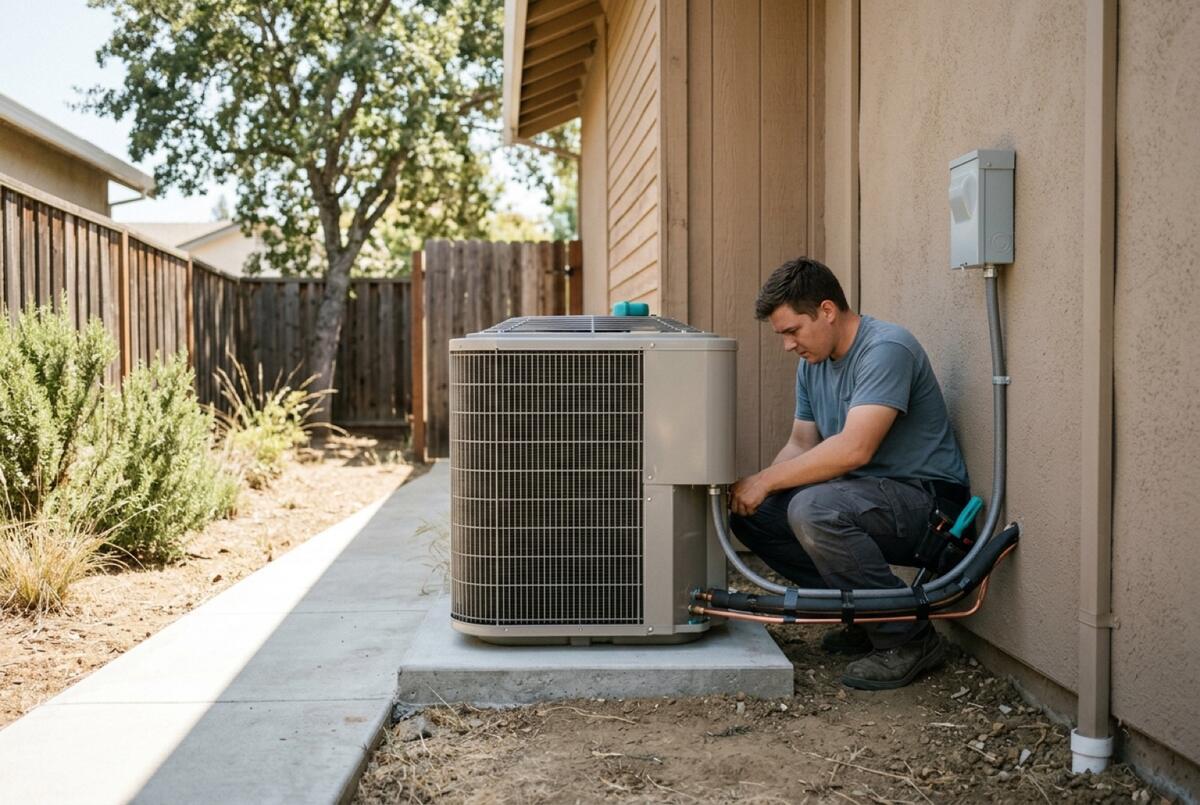
HVAC Permits in the Sacramento Region: Who Issues Them and Why It Matters
Replacing an AC or furnace in the Sacramento area needs a permit — and who issues it depends on your city or unincorporated county address. Here's how it works.
Last reviewed:
Why an HVAC change-out needs a permit at all
A permit exists so the installation is inspected against current mechanical, electrical, and gas code — the same code that keeps a gas furnace venting safely and an electrical connection sized correctly. Sacramento County's building FAQ states that a permit is required before a regulated mechanical, electrical, gas, or plumbing system is installed, enlarged, altered, repaired, removed, converted, or replaced.
A like-for-like AC or furnace swap counts as a replacement, so it falls squarely under that rule. Pulling the permit isn't red tape for its own sake: it's the mechanism that puts a code official's eyes on the gas connection, the condensate drain, the electrical disconnect, and the equipment sizing before the system is buried behind drywall or left running in an attic.
- City building department
- Sacramento, Elk Grove, Roseville, Folsom, Rancho Cordova, Citrus Heights, West Sacramento and Davis
- Sacramento County
- Carmichael and Fair Oaks
Repairs vs replacements: what actually triggers a permit
Not every service call needs a permit, and knowing the line helps you spot a contractor who's cutting corners. A straightforward repair — replacing a capacitor, a contactor, a blower motor, a control board, or recharging within an existing sealed system — generally doesn't require a permit, because you're restoring existing equipment rather than altering the regulated system.
A change-out or replacement — a new condenser, a new furnace or air handler, a new heat pump, or a duct replacement — does, because you're installing regulated mechanical, electrical, or gas equipment. The county's own language covers work that installs, alters, replaces, or converts a regulated system, which is exactly what a change-out is. If a contractor offers to swap your whole system with no permit "to save you money," that's a warning sign, not a favor.
The key split: incorporated city vs unincorporated county
This is the part homeowners get wrong most often, and it's the single most important thing to get right. If you live inside an incorporated city, that city's building division issues the permit. If your address is in an unincorporated community — Carmichael and Fair Oaks are the common examples in this area — there is no city hall, and the permit goes through Sacramento County's Building Permits & Inspection Division, not a city.
A mailing address that reads "Carmichael" or "Fair Oaks" is county jurisdiction even though it feels like its own town, because those communities were never incorporated as cities. When you're not sure whether your parcel is inside a city or in the unincorporated county, the county or your city's permit portal can confirm which authority covers your specific address before any work is scheduled.
Who issues permits, by jurisdiction
Here's where the permit comes from across the region 916air serves. These are the issuing authorities and portals as verified for each jurisdiction; timelines, fees, and exact form names are set by each office and can change, so treat this as the map of who to talk to, not a fee schedule.
| Community | County | Issuing department / portal |
|---|---|---|
| Sacramento (city) | Sacramento | Community Development Department, Building Division — instant online permits for minor HVAC, open to homeowners and contractors |
| Elk Grove | Sacramento | Building Safety and Inspection Services — HVAC, condenser, furnace, and duct replacement as a minor residential permit via eTRAKiT |
| Folsom | Sacramento | Community Development, Building Division — ePermit Center / eTRAKiT |
| Roseville | Placer | Development Services, Building Permit Center — HVAC and duct change-out as a quick permit |
| Rancho Cordova | Sacramento | Community Development, Building and Safety Division — HVAC change-out as a miscellaneous mechanical permit, available online |
| Citrus Heights | Sacramento | Building & Safety Division — PermitCity portal |
| Carmichael and Fair Oaks (unincorporated) | Sacramento | Sacramento County Building Permits & Inspection Division — Accela Citizen Access (no city building department) |
| West Sacramento | Yolo | Community Development, Building Division — Citizen Access Portal |
| Davis | Yolo | Community Development & Sustainability, Building Division |
Which page covers a change-out in my city?
Each city page covers that city's permit office, electric utility, and rebate channel for the specific job. Find your city, then the equipment you are replacing.
Walking an address to the right office
Walk the address in this order. First, decide whether the parcel is inside an incorporated city. Sacramento, Elk Grove, Folsom, Rancho Cordova, and Citrus Heights each issue their own city permit in Sacramento County: Sacramento's Building Division offers instant online permits for minor HVAC (homeowners and contractors), Elk Grove uses eTRAKiT for HVAC, condenser, furnace, and duct as a minor residential permit, Folsom uses the ePermit Center / eTRAKiT, Rancho Cordova posts HVAC change-outs as a miscellaneous mechanical permit online, and Citrus Heights uses PermitCity.
Second, if the mailing city is Carmichael or Fair Oaks, there is no city hall — Sacramento County's Accela Citizen Access portal is the issuing office. Third, Roseville is Placer County and uses Development Services for a quick HVAC and duct permit. Fourth, West Sacramento and Davis are Yolo County; each has its own building division, and neither routes through Sacramento County or the City of Sacramento.
What the permit process usually looks like for a replacement
For a standard residential change-out, most jurisdictions in the region let the permit be applied for electronically, and Sacramento County notes that residential heating and cooling install or replacement permits can be applied for online and automatically issued after payment. The permit is generally the quick part.
The step that matters is the inspection that follows the installation: an inspector confirms the equipment is installed to code — proper gas connection and venting, a correct electrical disconnect and wire sizing, a working condensate drain, secure mounting, and equipment that matches what the permit described. Timelines and fees are set by each jurisdiction, so the specifics depend on where you live, but the shape is consistent: define the job, pull the permit, install, then pass inspection to close it out.
HERS testing and Title 24: the duct-leakage step
California's Title 24 energy code adds a step that catches homeowners off guard. Depending on the scope of work and jurisdiction, a heat pump or duct project can trigger a HERS (Home Energy Rating System) verification — most commonly a duct-leakage test performed by an independent HERS rater and documented on a CF3R certificate. In the Sacramento region this comes up clearly with Roseville's rebate program, which requires ductwork passing Title 24 via HERS CF3R verification, and it can apply elsewhere when a change-out disturbs the duct system enough to require testing.
The practical takeaway: when a replacement touches the ducts, expect the possibility of a third-party test, and understand that this is exactly why duct condition matters on a replacement — a system that can't pass a leakage test needs its ductwork and airflow addressed, not ignored. Because HERS applicability depends on the specific scope and jurisdiction, confirm whether your project triggers it as part of the scope rather than assuming either way.
How permitting protects you, not just the city
It's tempting to see a permit as a cost with no benefit to you — but the protection is real and it's yours. A properly permitted and inspected install is the independent record that the equipment was sized, connected, and vented to code. That record is exactly what a future buyer, appraiser, or home inspector looks for, and it's what an insurer may ask about after a fire or water-damage claim tied to HVAC equipment.
Unpermitted work, by contrast, can surface at the worst possible time — during escrow on a home sale, when an appraiser flags undocumented equipment, or when a claim is questioned because there's no proof the installation met code. As a Sacramento-area real-estate reality, unpermitted change-outs are a recurring friction point at closing. Permitting up front is cheap insurance against an expensive surprise later.
How this fits into a replacement decision
The permit itself is rarely the expensive part of a project, but skipping it creates real downstream cost, so it belongs in the plan from the start rather than as an afterthought. When 916air scopes a replacement — whether it's AC installation, furnace installation, or heat pump installation — the applicable permit requirement is written into the scope up front so it isn't a surprise, and the jurisdiction is identified based on your actual address rather than assumed from the mailing city. If you're still weighing whether to replace at all, the repair-or-replace guide walks through the rest of that decision, and any SMUD heat pump rebate basics that might apply are noted separately, since eligibility and program terms have to be verified.
Sources
- Sacramento County Building Permits & Inspection Division (opens in new tab)
- Sacramento County building permit FAQ (when permits are required; online issuance) (opens in new tab)
- City of Sacramento — Building permit services (opens in new tab)
- California Energy Commission — Building Energy Efficiency Standards (Title 24 / HERS) (opens in new tab)
Related services
AC Installation & Replacement
Right-sized replacement with a written scope.
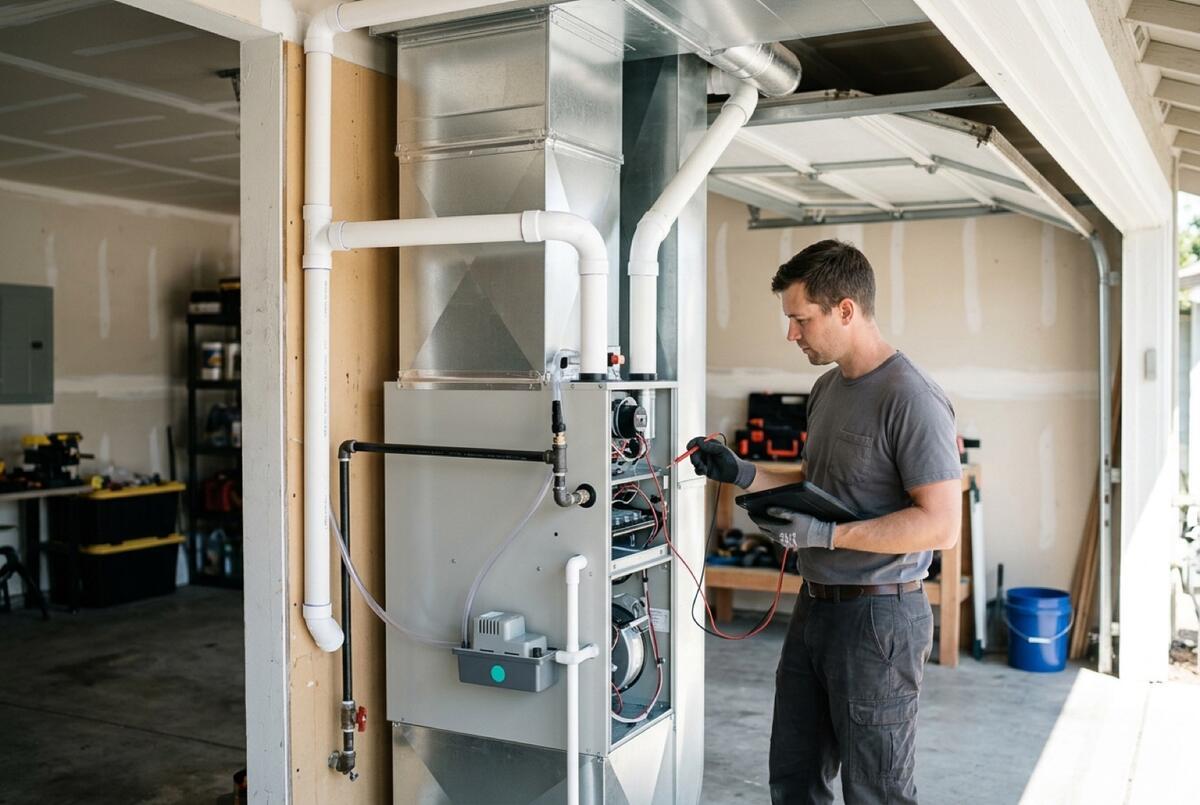
Furnace Installation & Replacement
The right heat source, not the default one.
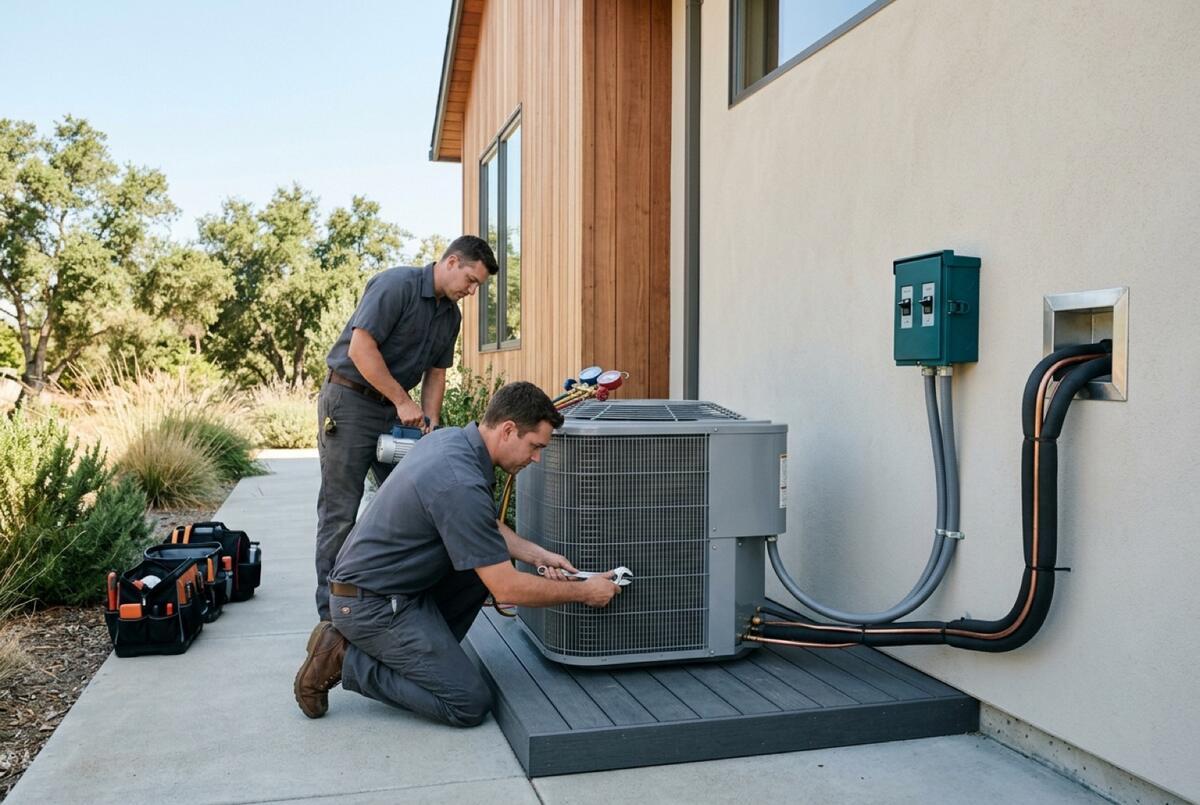
Heat Pump Installation
Heating and cooling on one efficient system.
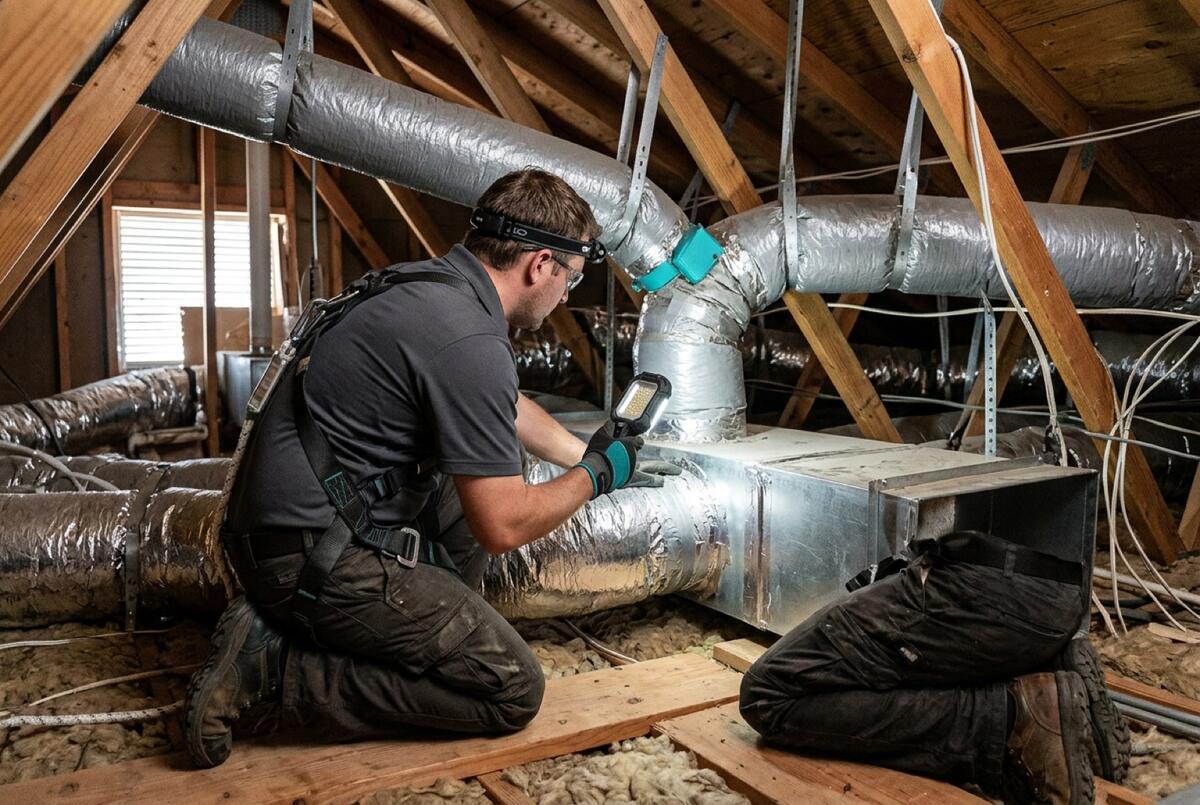
Ductwork & Airflow
Fix the delivery, not just the equipment.
Related guides
SMUD Heat Pump Rebates: What Sacramento Homeowners Should Know
SMUD offers heat pump rebates for qualifying Sacramento-area homes, but amounts and eligibility change. Here's how the program works and what to verify first.
Local rules · ReviewedRepair or Replace Your HVAC System? A Sacramento Decision Guide
Deciding whether to repair or replace your AC or furnace? Weigh age, repair cost, refrigerant, efficiency, and comfort, plus the $5,000 test.
Cost and decisions · Reviewed
Frequently asked questions
Do I really need a permit just to replace my AC?
Yes. Across the Sacramento region, replacing an AC, furnace, or heat pump is treated as altering a regulated mechanical system, which requires a permit before the work is done. A like-for-like swap still counts. The permit is what puts the installation on record as inspected to current code, which protects you at resale and on insurance claims.
Does a simple AC repair need a permit too?
Generally no. Restoring existing equipment — replacing a capacitor, contactor, blower motor, or control board, or servicing within the existing sealed system — usually doesn't require a permit. It's the change-out or replacement of regulated equipment (a new condenser, furnace, air handler, heat pump, or duct system) that triggers one. If a contractor offers a full system swap with no permit, treat that as a warning sign.
My address says Carmichael — do I go to a city or the county?
Carmichael and Fair Oaks are unincorporated, so their permits go through Sacramento County's Building Permits & Inspection Division, not a city building department. The mailing city name doesn't change that. If you're unsure whether your parcel is incorporated, the county portal can confirm the jurisdiction before work is scheduled.
Is West Sacramento the same as Sacramento for permits?
No. Despite the name, West Sacramento is in Yolo County and permits through the City of West Sacramento's own Building Division, not the City of Sacramento or Sacramento County. Davis is also Yolo County. It's a common mix-up, which is why the correct jurisdiction should be confirmed from your actual address rather than assumed from the word "Sacramento."
What is a HERS test and will my replacement need one?
HERS (Home Energy Rating System) verification is an independent test — most often a duct-leakage test documented on a CF3R certificate — that California's Title 24 energy code can require depending on the scope and jurisdiction. Heat pump and duct projects are the common triggers; Roseville's rebate program, for instance, requires ductwork passing Title 24 via HERS verification. Whether your specific job needs one should be confirmed as part of the scope.
How long does an HVAC permit take?
For a standard residential change-out, many Sacramento-region jurisdictions issue the permit electronically, and Sacramento County notes install or replacement permits can be applied for online and automatically issued after payment. The permit is usually quick; the step that takes scheduling is the post-installation inspection. Exact timelines and fees vary by jurisdiction.
Does 916air pull the permit for me?
We identify the correct jurisdiction and build the permit requirement into your written scope so it's accounted for from the start. Because permit handling and responsibilities can vary by job and jurisdiction, we confirm the specifics with you as part of the scope rather than making a blanket promise here.
What happens if HVAC work was done without a permit?
Unpermitted mechanical work can create problems when you sell, refinance, or file an insurance claim, since there's no inspection record that the system was installed to code. It can sometimes be resolved after the fact through the jurisdiction, but that's more involved than permitting the work upfront. If you've bought a home with a recent change-out, it's worth confirming it was permitted.
Talk to someone who explains first
916air diagnoses the real problem and puts your options in writing. Send your details to get started.